
Search News
Industry Portal
Hot Articles
How to verify that NIOSH protective respirators are approved
Time
Click Count
A NIOSH approval claim can be verified only when the complete respirator configuration matches an active approval record. A familiar filtering-facepiece shape, an “N95” marking, or a package statement is not enough. Approval applies to a defined assembly of components: the facepiece or respirator body, filters or cartridges, harness, valves, batteries where applicable, and any specified accessories. A substituted component may leave the equipment looking legitimate while placing it outside the approved configuration.
Start with the marking permanently applied to the respirator or, where applicable, to the approved component. For many particulate-filtering respirators approved under 42 CFR Part 84, the approval number is commonly shown in the format TC-84A-XXXX. The “TC” identifies a testing and certification approval, “84A” identifies the relevant approval schedule, and the final digits identify the individual approval. Other respiratory-protection categories can have different approval-number formats. Record the number exactly, including letters, hyphens, and digits, before attempting a database search.
The physical marking should be legible, durable, and consistent with the type of equipment. On a filtering facepiece, required information is often printed directly on the filtering material or another permanent part of the respirator. On reusable half-mask and full-facepiece assemblies, approval information may appear on the facepiece, cartridge, filter, or label material specified for the assembly. A detached package, photocopied certificate, or seller-provided product sheet cannot replace the markings required on the actual item.
Read the approval marking as a technical identifier
An approval label contains information that must be interpreted together rather than selected piecemeal. Locate the approval number, the approval holder’s name or abbreviated identifier, the protection class, and any limitations or cautions. For particulate respirators, markings such as N95, N99, or N100 describe a particulate-filter category; they do not establish protection against organic vapors, acid gases, oxygen-deficient atmospheres, or all airborne hazards. “N” indicates a filter classification with limitations concerning oil aerosols. The letter and number must match the conditions assessed in the hazard evaluation.
A powered air-purifying respirator, supplied-air respirator, self-contained breathing apparatus, or elastomeric air-purifying respirator requires closer reading because the approval may identify a system rather than a single visible product. The air-delivery source, hose, regulator, blower, battery, filter, cartridge, and facepiece can each be approval-critical. A loose component marked with an approval number does not prove that a field-assembled system is approved.
Watch for formatting that imitates an approval label without supplying a usable identifier. Statements such as “NIOSH compliant,” “meets N95 standard,” or “designed to NIOSH specifications” are not approval numbers. Spelling errors, incomplete TC numbers, marks that rub off unusually easily, and labels placed only on retail packaging should trigger further review. These signs do not independently prove a counterfeit item, but they justify holding the product outside service until the record and configuration are resolved.
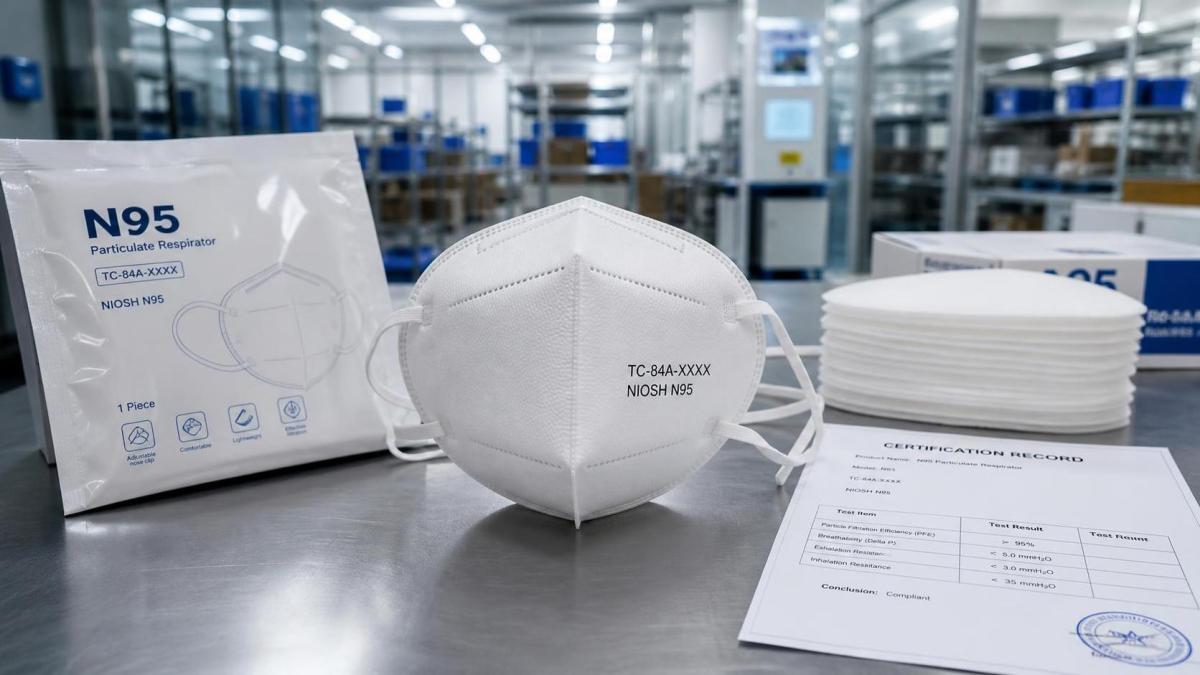
Match the item against the NIOSH approval record
Use the NIOSH Certified Equipment List, commonly called the CEL, to search the recorded approval. Search by the full TC number when it is available. If a number is incomplete, use the approval holder’s name and the respirator type, then compare results carefully. The objective is not merely to find a similar listing; it is to establish that the exact approval number, product description, and approved assembly correspond to the item in hand.
The record may provide an approval-holder name, model or trade name, facepiece type, protection class, and component details. For an air-purifying configuration, compare the cartridge or filter designation shown in the record with the installed component. For powered equipment, compare blower, battery, hose, and headtop or facepiece references where the approval documentation identifies them. Model names alone are weak evidence because variants may share a commercial family name while having different approvals.
NIOSH approval documents may include an approval label or a matrix. The matrix is especially important for assemblies because it shows permitted combinations. It can identify which facepiece may be used with which filter, cartridge, or air source. Treat this as a configuration control document. A cartridge from the same product line, with a similar connector or color code, is not automatically acceptable. Thread compatibility and physical fit do not establish approval compatibility.
Where the CEL search result appears incomplete or difficult to interpret, preserve the search terms, record URL, access date, and screenshots of the listing. These records support traceability during incoming inspection, internal audits, incident review, or supplier discrepancy handling. They also prevent a later substitution from being mistaken for the item originally verified.
Distinguish approval status from workplace suitability
Approval confirms that a listed respirator configuration satisfied the applicable NIOSH certification requirements. It does not by itself establish that the selected unit is suitable for a particular contaminant concentration, atmosphere, task duration, facial fit, or work environment. Verification must therefore remain connected to the written respiratory-protection program and the hazard assessment.
For example, an N95 filtering facepiece may be an approved particulate respirator, yet it is not a substitute for a cartridge-equipped respirator where harmful vapor exposure is present. Likewise, an approved air-purifying respirator is generally unsuitable for an atmosphere that may be oxygen deficient, immediately dangerous to life or health, or of unknown concentration unless the selected equipment and operating conditions are appropriate for those conditions. Approval verification and hazard-based selection are separate controls that must both be satisfied.
Facepiece condition also matters. The NIOSH record does not validate a damaged seal, stretched head straps, deformed inhalation valves, cracked exhalation-valve covers, contaminated cartridge threads, or altered gasket surfaces. On reusable equipment, inspect sealing surfaces, valves, harness connections, lens condition, and component interfaces before issue. For particulate filtering facepieces, inspect the nose clip, straps, foam, filter body, and any valve assembly. Components with visible damage, uncertain storage history, or unauthorized modification should be removed from available stock pending disposition.
Control the chain from receiving to issue
Verification is most reliable when performed before stock is mixed into general inventory. Receiving records should link the purchase order, supplier documentation, shipment lot or lot code where present, product model, TC approval number, and the quantity accepted. Photographs of the physical approval mark and the packaging label can be useful where product mix-ups have occurred previously. The record should identify the exact unit or lot reviewed rather than simply stating that an “N95” or “respirator” was received.
Several conditions justify a hold status:
- The TC number cannot be found in the NIOSH Certified Equipment List, or the recorded product type clearly differs from the delivered item.
- The approval holder, model, filter designation, or assembly details conflict with the listing, even though the packaging carries a plausible NIOSH statement.
- Mixed lots contain different labels, different strap attachments, altered valves, or inconsistent printing without a documented product revision.
- Replacement filters, cartridges, batteries, or harness parts arrive without evidence that they are included in the approved assembly matrix.
- Transport damage, moisture exposure, crushed cartons, excessive heat exposure, or compromised sealed packaging may have affected product condition.
A hold should lead to a focused technical inquiry rather than an assumption of fraud. Request the approval number, product identifier, current approval documentation, and confirmation of the exact delivered configuration from the approval holder or its authorized distribution channel. Compare the response against the NIOSH record, not solely against a sales catalog. If the response identifies a revised model, determine whether the revision remains within the same approved configuration or requires a separate approval reference.
Common errors in NIOSH protective respirators verification
A frequent error is treating the N95 designation as proof of approval. N95 is a filter class; the equipment still needs an authentic NIOSH approval and a matching TC number. Another error is accepting a certificate that names a legal entity but does not identify the precise respirator model, approval number, or component combination. Documents should be traceable to the equipment, not simply persuasive in appearance.
Component substitution creates a more subtle failure. During maintenance or field replenishment, it may seem reasonable to replace a cartridge, lens, battery, strap, or valve with a similar part from the same connector family. Unless the NIOSH approval record or matrix permits that combination, the resulting assembly may no longer be approved. Maintain separate storage locations and unmistakable part identification for respirator components that look alike but belong to different approval configurations.
Repackaging also deserves scrutiny. Bulk repacking can separate respirators from the original approval labeling, lot information, instructions, and storage limits. Where repacking is unavoidable, preserve the original traceability data and ensure each secondary package retains enough information to connect the unit to its verified approval record. Do not create labels that imply an approval status beyond the original marking or documentation.
Online listings introduce another source of error because photographs may depict a valid product while the delivered goods differ by model, factory, lot, or component design. Inspect the received item rather than validating only the listing image. A low-resolution image of a TC number should never be transcribed without confirming it on the physical respirator or its controlled original packaging.
Maintain approval verification after initial acceptance
NIOSH approval status should be reviewed when a product change, alternate source, component change, or new packaging format enters inventory. Keep the approved configuration information with the respirator program documentation so that maintenance, warehouse, and issue points use the same reference. A controlled list can include the TC number, respirator description, permitted filters or cartridges, applicable limitations, source record, and date of the most recent verification.
Storage conditions should follow the instructions associated with the approved product. Avoid crushing filtering facepieces, exposing elastomeric materials to unsuitable chemicals, or allowing cartridges and filters to remain unprotected from dust and moisture. Where cartridge service life is relevant, the change schedule must be based on the contaminant, concentration, humidity, work rate, and other applicable conditions; odor alone is not a dependable indication that a cartridge remains protective.
When approval evidence, physical marking, and installed configuration all agree, the respirator has passed the approval-verification stage. It still requires proper selection, fit testing where required, inspection, maintenance, training, and program oversight before it can be relied upon in service. Keeping those controls distinct makes discrepancies easier to find before respiratory protection is needed.
Recommended News