
Search News
Industry Portal
Hot Articles
China temporarily bans helium exports, putting testing and certification chains under pressure
Time
Click Count
On July 10, 2026, the Ministry of Commerce and the General Administration of Customs of China jointly announced that a temporary export ban on helium (HS code: 2804290010) will be implemented with immediate effect. Since helium is used for high-precision gas analysis, respirator air tightness testing, infrared spectrum calibration, and factory quality inspection of some high-end PPE, this change will directly affect the quality verification, CE/UL certification re-inspection, and pre-volume shipment compliance testing of overseas manufacturers who rely on Chinese helium sources. For relevant companies, this is not a single raw material adjustment, but a rule signal that affects the pace of testing, certification, and delivery, which deserves continued attention.
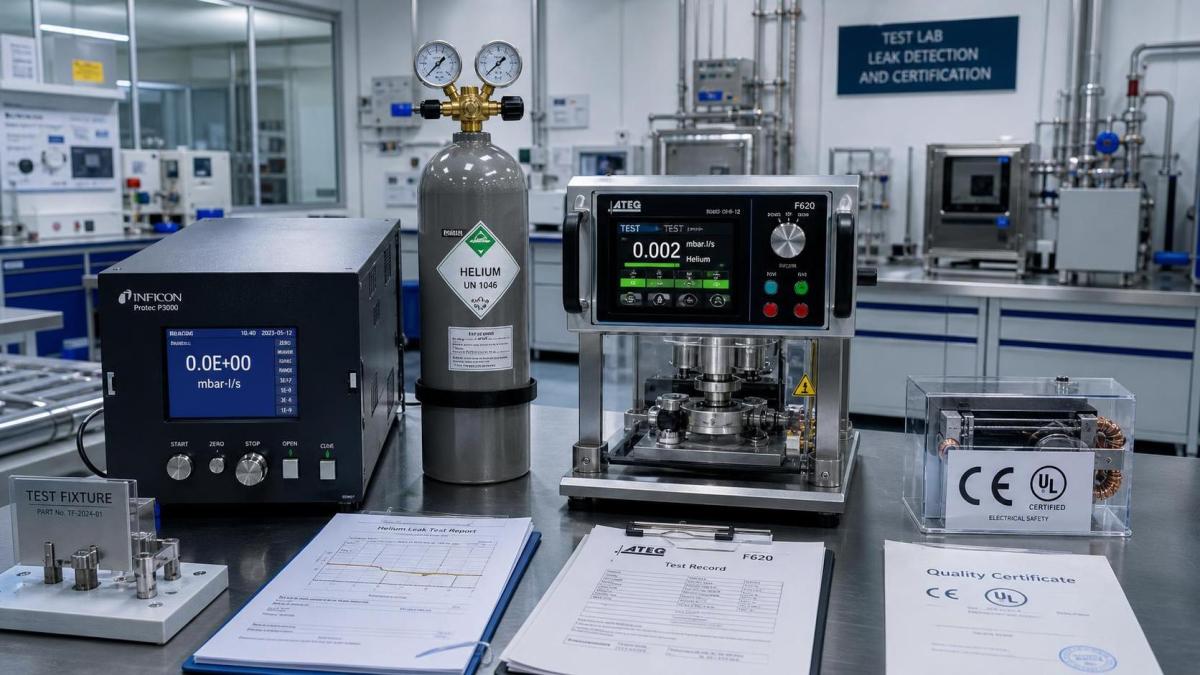
Changes in helium export management have fallen to the trade execution level
According to known information, on July 10, 2026, the Ministry of Commerce and the General Administration of Customs of China jointly announced that a temporary export ban on helium (HS code: 2804290010) will be implemented from that day. What is involved here is not general market price fluctuations, but changes in export management methods, which directly point to the flow of raw materials and trade execution arrangements in cross-border supply chains.
Helium plays a key role in high-precision gas analyzers, medical/industrial respirator air tightness testing, infrared spectrum calibration and some high-end PPE factory quality inspections. The confirmed impact focuses on the quality verification, CE/UL certification re-inspection and pre-volume shipment compliance testing of overseas manufacturers who rely on Chinese helium sources.
From raw material procurement to certification re-inspection, multiple links will be affected
Downstream manufacturing and testing links are the first to feel the pressure
For gas detection equipment manufacturers, respirator-related companies, and high-end PPE manufacturers that use helium for testing and calibration, the impact is not only on raw material procurement itself, but also on factory inspection, re-inspection arrangements, and batch release rhythm. From an analysis point of view, any company that uses helium as a test medium, verification medium or calibration medium will face the reorganization of inspection schedules more directly.
Additional coordination costs may arise for certification-related businesses
The event summary has clearly mentioned the CE/UL certification re-inspection link. For certification-related companies, testing service agencies and export companies, this means that verification work that originally relied on Chinese helium sources may need to re-coordinate testing resources, testing windows and supply arrangements. What deserves more attention now is whether certification materials, re-inspection plans and compliance testing before batch shipment will be delayed as a result, rather than simply being judged as a delivery interruption.
Trade and supply chain service links need to recheck documents and delivery dates
For direct trade companies, supply chain service providers and purchasers, the most practical issues are procurement plans, delivery cycles and document matching. Observation shows that such management changes usually first affect the pace of order fulfillment, and then are transmitted to third-party testing and cross-border shipping arrangements. If the company's product verification relies on a fixed helium source, the original procurement path, testing outsourcing arrangements and pre-shipment confirmation process need to be rechecked.
What practical points should companies focus on now?
First check whether the affected products really rely on helium testing
Companies should first sort out whether the products are related to high-precision gas analyzers, respirator air tightness testing, infrared spectrum calibration or high-end PPE factory quality inspection related scenarios. Only by matching helium usage points with specific processes can we determine which link this export management change will fall into, rather than generalizing to all supply chain risks.
Re-check the test conditions in certification, re-inspection and bidding documents
For companies that require CE/UL certification re-inspection, third-party testing or bidding verification, it is recommended to review the technical documents, test method descriptions and procurement terms as soon as possible to see if helium media, designated test conditions or fixed supply sources are stated. If relevant documents still use the old verification path, connection problems are more likely to occur during subsequent re-inspection, delivery or acceptance.
Synchronously adjust procurement plans and alternative supply arrangements
Within the scope of known information, the most direct business action is to re-evaluate inventory, test scheduling and supplier qualifications, rather than waiting for the market to digest it on its own. For companies that rely on Chinese helium sources to complete pre-shipment testing, the purchasing department and quality department need to work together to confirm whether the existing testing arrangements will affect batch release.
Focus on subsequent execution caliber rather than drawing conclusions in advance
What has been confirmed so far is the temporary export ban management itself, and no more execution details have been provided. From an analysis point of view, what is more critical in the follow-up is whether the official statement, enforcement standards and actual feedback from enterprises are further clarified; before that, it is more secure to understand it as a signal of rule changes that has already been implemented.
This is more like an execution signal, and we still need to continue to observe the enforcement details
From an industry perspective, the significance of this information is not to create additional expectations, but that it clearly reminds that the cross-border circulation of helium, a key medium, has entered a new management state. For the testing, certification, procurement and delivery chain, it is currently better understood as a rule change that has already occurred, rather than the full market results that can be immediately extrapolated.
What needs to be continuously observed next is whether the policy details, certification enforcement standards, bidding documents have been adjusted, and whether relevant companies will switch to different testing arrangements to maintain the delivery rhythm. As long as these links are not further clarified, industry judgment should remain within the scope of "changes have been implemented, but the impact transmission remains to be seen."
What information was used to form this manuscript?
This article is generated based on the information title, event time and event summary provided by the user. No specific facts outside the input are introduced. Types of sources typically associated with such events include official announcements, regulatory agency releases, customs or trade authority information, industry association information, standards organization documents and authoritative media reports.
This input does not provide a specific official source link. It is still necessary to continue to verify policy details, certification enforcement standards, changes in bidding documents, industry feedback and corporate enforcement to confirm the actual impact of management changes in different business scenarios.
Recommended News