
Search News
Industry Portal
Hot Articles
How to Evaluate Smart Building Controls for Energy Savings and HVAC Integration
Time
Click Count
Evaluating smart building controls requires more than comparing feature lists. For technical evaluators, the real question is whether a control platform can produce measurable energy savings, integrate cleanly with HVAC equipment, and remain reliable as the building evolves. A strong system does not simply automate schedules. It turns operating data into control decisions that reduce waste, improve comfort, and support maintainable building performance.
When assessing smart building controls, the most important factors are not flashy dashboards or broad marketing claims. The real differentiators are interoperability, control depth, data quality, cybersecurity, and the ability to verify savings after deployment. If a platform cannot communicate effectively with HVAC assets, normalize field data, and support practical optimization workflows, it will struggle to deliver durable value.
For engineers, specifiers, and technical evaluation teams, the best approach is to use a structured framework. This means reviewing the building baseline, mapping HVAC integration points, validating protocol support, checking analytics and alarming functions, and testing whether the system can scale across multiple sites. The goal is to select smart building controls that reduce operating cost without creating integration debt or long-term vendor lock-in.
What Technical Evaluators Should Confirm First
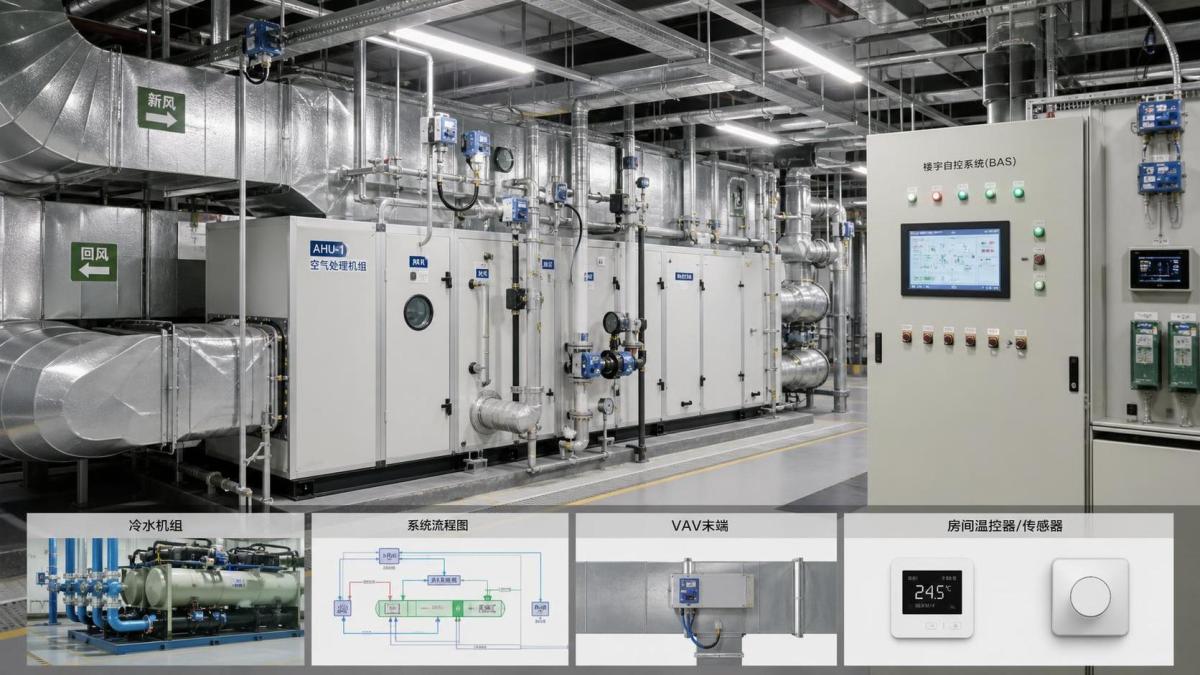
Before comparing vendors, define the building performance problem that the controls must solve. In some facilities, the priority is reducing HVAC runtime during low occupancy. In others, it is eliminating simultaneous heating and cooling, improving zone control, or gaining visibility into aging air-handling equipment. Without this baseline, product comparisons often become feature-driven instead of outcome-driven.
Start with three questions. First, where is the building currently losing energy. Second, which HVAC systems are responsible for the largest controllable load. Third, what operational constraints cannot be compromised, such as air quality, pressurization, process cooling, or tenant comfort. These answers determine whether the right evaluation lens is retrofit simplicity, control sophistication, or enterprise-wide system coordination.
Technical readers usually care less about general smart building language and more about implementation risk. They want to know whether the controls can connect to legacy BACnet devices, whether points can be mapped without extensive custom engineering, whether trend logs are granular enough for diagnostics, and whether the control logic can be adjusted without disrupting site operations. These are the questions that materially affect project success.
How Smart Building Controls Actually Deliver Energy Savings
Energy savings come from control strategy, not from connectivity alone. Smart building controls save energy when they continuously adapt HVAC operation based on occupancy, temperature drift, outdoor conditions, demand patterns, and equipment status. The value lies in reducing unnecessary runtime while still maintaining environmental targets.
Key savings strategies include optimized start and stop, demand-controlled ventilation, supply air temperature reset, chilled water or hot water reset, static pressure reset, occupancy-based scheduling, and fault detection that prevents hidden waste. A platform that supports these strategies with transparent logic and reliable sensor input will generally outperform one that focuses mainly on visualization.
Evaluators should ask vendors to show how the system identifies, executes, and verifies each strategy. For example, can the controls automatically reduce ventilation when occupancy drops, while still meeting code and indoor air quality requirements. Can they detect a stuck damper, rogue reheat valve, or short-cycling unit before energy waste becomes chronic. Controls with strong diagnostics usually create better savings persistence over time.
It is also important to distinguish between theoretical and operational savings. Many platforms can model potential reductions, but fewer can sustain them after seasonal changes, maintenance turnover, or tenant reconfiguration. The strongest solutions include trend analysis, fault prioritization, and measurement workflows that help operators validate whether expected savings are actually being delivered.
What Good HVAC Integration Looks Like in Practice
HVAC integration is where many smart building controls projects succeed or fail. A system may advertise broad compatibility, but technical teams need to confirm how deeply it integrates with actual field equipment. There is a major difference between reading a few points from rooftop units and controlling sequences across chillers, boilers, variable air volume boxes, air handlers, and terminal devices.
Good integration starts with protocol support, especially BACnet, Modbus, LonWorks, KNX, or vendor-specific gateways where legacy equipment is involved. But protocol support alone is not enough. Evaluators should review point availability, polling behavior, write permissions, time synchronization, alarm handling, and the ability to normalize data from mixed equipment generations.
A practical assessment should map every target HVAC asset and classify integration depth. Some devices may need only monitoring. Others require supervisory control, scheduling, setpoint adjustment, or sequence coordination. This prevents teams from assuming full interoperability when only partial visibility is available.
Technical evaluators should also examine whether the control platform supports edge processing or relies heavily on cloud latency for decision-making. Critical HVAC functions should remain stable during network interruptions. If cloud analytics are used, the local control layer must still maintain safe and effective operation independently.
Which Data and Analytics Capabilities Matter Most
For technical teams, data visibility is useful only if it improves decisions. The best smart building controls platforms present clean, contextualized information that helps identify drift, inefficiency, and asset issues. Raw trend overload is not enough. Evaluators need evidence that the system can convert field data into actionable diagnostics.
Important capabilities include high-resolution trending, customizable dashboards, alarm rationalization, fault detection and diagnostics, exception-based reporting, and role-based access to data. It should be easy to compare zone temperature behavior, equipment runtime, occupancy patterns, and energy intensity across periods or buildings.
Point naming and metadata structure deserve close attention. Poorly organized data becomes a long-term operational burden, especially in portfolios with multiple sites. A control system that enforces tagging conventions, equipment hierarchies, and reusable templates will support more reliable analytics and faster troubleshooting.
Another important evaluation area is how the platform supports verification. Can teams establish pre-implementation baselines, compare against weather-normalized periods, and isolate the impact of scheduling or sequence changes. Controls that support measurement and verification workflows are more credible when justifying capital spend and operational savings claims.
How to Evaluate Cybersecurity, Reliability, and Lifecycle Risk
Because smart building controls connect physical assets to digital infrastructure, cybersecurity is a core technical requirement. Evaluation should include encryption practices, authentication controls, network segmentation support, audit logging, firmware update processes, credential management, and incident response procedures. For facilities with strict access or uptime requirements, these controls are not optional.
Reliability matters just as much as security. Ask how the system handles controller failure, communication loss, sensor faults, and gateway outages. Review whether local fallback logic protects HVAC operation when the supervisory layer is unavailable. Buildings need predictable behavior under degraded conditions, not just under ideal network assumptions.
Lifecycle risk often appears later, after procurement. Technical teams should assess vendor dependence, licensing structure, support coverage, integrator ecosystem, and access to engineering tools. A platform that requires expensive proprietary intervention for routine changes may undermine the business case, even if the initial deployment looks attractive.
Scalability should also be tested early. If the organization may expand from one site to a campus or portfolio, the controls should support standardized templates, multi-site visibility, remote updates, and governance over naming, alarming, and user access. Systems that scale cleanly usually reduce both operational friction and long-term integration cost.
A Practical Evaluation Framework for Vendor Comparison
To compare smart building controls objectively, use a weighted scorecard instead of relying on demos alone. Categories should include HVAC interoperability, control strategy support, analytics depth, cybersecurity, commissioning effort, serviceability, and total cost of ownership. This structure helps teams separate operational value from presentation quality.
Include site-specific test scenarios in the evaluation. Ask vendors to show how their system would handle after-hours occupancy, ventilation reset, abnormal temperature drift, sensor calibration issues, and alarm escalation. Real use cases reveal system maturity far better than generic product walkthroughs.
Commissioning requirements should be part of the score. Controls that are powerful but difficult to commission often delay savings and burden internal teams. Review point mapping workflows, graphics creation, sequence validation, documentation output, and the effort required for future adjustments after handover.
Cost analysis should go beyond hardware and software pricing. Account for gateways, engineering labor, training, cloud subscriptions, analytics modules, cybersecurity hardening, and ongoing support. The strongest investment case usually comes from a platform that delivers clear savings with manageable complexity, not from the broadest feature set.
Finally, require a post-implementation verification plan. Define success metrics before purchase, such as HVAC energy reduction, fault response time, schedule compliance, comfort stability, or maintenance call reduction. A system that cannot be measured clearly will be difficult to justify later, even if it appears technically impressive during evaluation.
Conclusion: Choose Controls That Improve Operations, Not Just Automation
The right smart building controls platform should do three things well. It should reduce avoidable energy use, integrate reliably with HVAC systems, and give operators trustworthy data for ongoing improvement. Technical evaluators should prioritize these fundamentals over broad but shallow feature claims.
In practice, the best decision comes from structured evaluation. Define the building baseline, verify integration depth, examine control logic, test analytics usefulness, and review cybersecurity and lifecycle support with the same rigor. When those elements are aligned, smart building controls can become a practical engine for energy savings, HVAC optimization, and more resilient building performance.
For organizations managing high-performance facilities, the real value of smart building controls is not automation for its own sake. It is the ability to make building systems measurable, responsive, and continuously more efficient. That is the standard technical teams should use when making a selection.
Recommended News