
Search News
Industry Portal
Hot Articles
APEC Adds Smart Hardware to Friend-Shoring Priority List
Time
Click Count
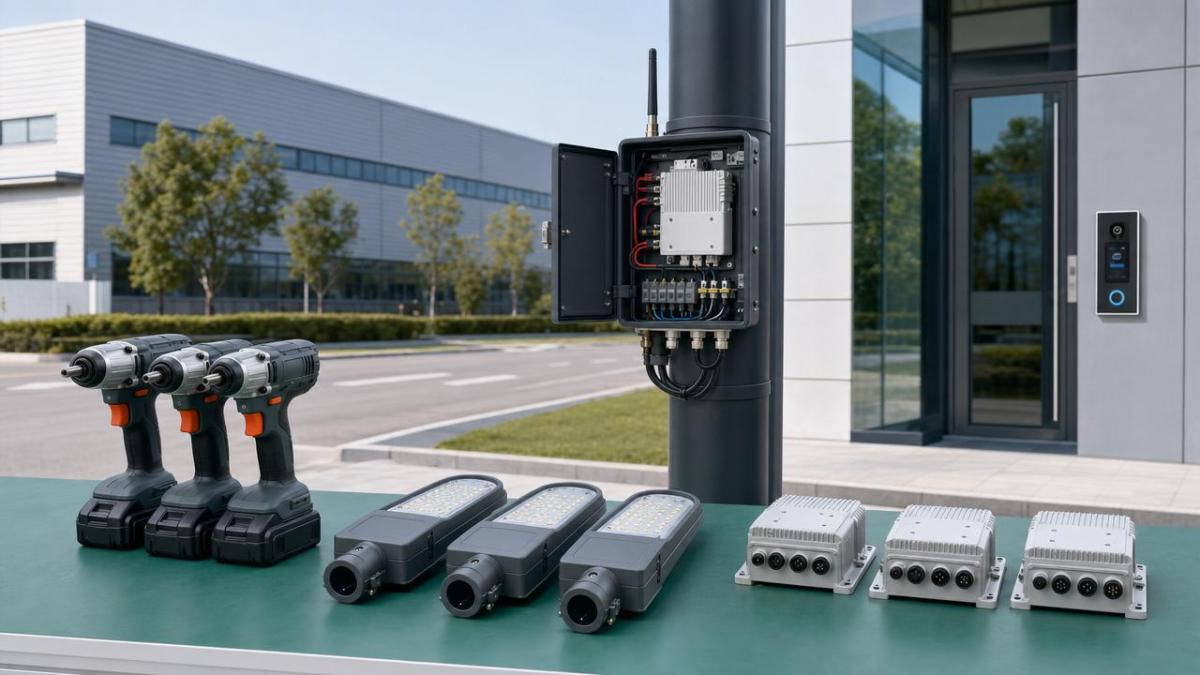
APEC Trade Ministers, meeting on May 22, 2026, agreed to include brushless Li-ion power tools, smart street lighting IoT systems, and iris biometric locks in the ‘Resilient Supply Chain Friend-Shoring Priority Cooperation Categories’. This development signals heightened institutional support for cross-border trade in select intelligent hardware—particularly for exporters targeting Latin America, ASEAN, and Canadian government procurement channels. Companies engaged in design, manufacturing, certification, or distribution of these high-embeddedness, low-geopolitical-dependency hardware categories should monitor policy implementation closely.
Event Overview
On May 22, 2026, APEC Trade Ministers concluded their annual meeting with a consensus statement identifying brushless Li-ion tools, smart street lighting IoT systems, and iris biometric locks as priority categories under the ‘resilient supply chain friend-shoring’ framework. The ministers encouraged member economies to establish fast-track customs clearance procedures and mutual recognition mechanisms for product certifications. These measures aim to facilitate inclusion of qualifying products in public procurement directories across Latin America, ASEAN, and Canada.
Industries Affected
Direct Exporters and OEM/ODM Manufacturers
These firms produce or brand the three designated product categories. They are directly positioned to benefit from streamlined customs processing and harmonized certification pathways—but only if their products meet technical specifications and conformity assessment criteria recognized by participating APEC economies.
Component and Subsystem Suppliers
Suppliers of critical subsystems—such as brushless motor controllers, edge AI modules for iris recognition, or LoRaWAN-enabled lighting controllers—may see increased demand. However, this depends on whether final-product manufacturers pass down certification alignment requirements upstream.
Certification and Testing Service Providers
Third-party labs and conformity assessment bodies accredited in multiple APEC markets may experience higher request volumes for joint testing reports and multi-jurisdictional certification packages—especially where mutual recognition is formalized.
Distribution and Government Procurement Channel Operators
Firms managing logistics into public-sector tenders (e.g., municipal infrastructure projects, national ID programs) may face revised documentation requirements or accelerated evaluation timelines for listed categories—provided national implementing agencies adopt the APEC guidance.
What Enterprises and Practitioners Should Monitor and Do Now
Track official implementation roadmaps by economy
While the APEC statement is ministerial-level consensus, national adoption remains voluntary. Exporters should monitor announcements from customs authorities, standards bodies, and procurement agencies in target markets—including Mexico’s SAT, Indonesia’s BSN, and Canada’s Public Services and Procurement Canada—for operational details on fast-track lanes or mutual recognition frameworks.
Verify alignment of current product certifications
Confirm whether existing test reports and declarations (e.g., IEC/EN safety, ISO/IEC 19794-6 for iris biometrics, IEC 62304 for medical-grade embedded software in lighting controls) are accepted—or require supplementation—under emerging bilateral or plurilateral recognition arrangements.
Distinguish policy signal from procurement eligibility
The APEC decision does not automatically qualify products for government contracts. It creates a cooperative framework; actual listing in national procurement catalogs still requires compliance with local tender rules, pricing competitiveness, and domestic preference clauses. Treat the announcement as an enabler—not a guarantee.
Prepare documentation for rapid customs classification
Ensure Harmonized System (HS) codes for each product variant are pre-verified (e.g., HS 8505 for brushless motors, HS 8536 for biometric access control units, HS 9405 for smart LED streetlights), and that technical documentation supports clear classification—reducing delays at border checkpoints even before formal fast-track systems launch.
Editor Perspective / Industry Observation
Observably, this APEC outcome functions primarily as a coordination signal—not an implemented mechanism. It reflects growing consensus among Pacific Rim economies to prioritize technical interoperability and supply chain diversification over pure cost arbitrage. Analysis shows the selected categories share two traits: high firmware/software integration and minimal reliance on single-source semiconductor or rare-earth inputs—making them politically viable for friend-shoring. From an industry perspective, the move is less about immediate tariff shifts and more about institutional scaffolding for future regulatory convergence. Current relevance lies in its directional weight: it elevates certain intelligent hardware categories to strategic parity with pharmaceuticals or clean energy components in multilateral trade planning. Continued attention is warranted—not because rules have changed, but because standard-setting momentum has shifted.
Conclusion
This APEC decision marks a formal step toward institutionalizing resilience criteria in regional trade cooperation—not a sudden market opening. Its significance lies in signaling which intelligent hardware subsegments align with evolving geopolitical and technical priorities across key growth markets. For stakeholders, the most rational interpretation is that it initiates a multi-year alignment process, not an instant procurement advantage. Monitoring national-level follow-up—and preparing documentation and certifications accordingly—is more actionable than expecting immediate commercial impact.
Source Attribution
Main source: Official communiqué issued by the APEC Secretariat following the 2026 APEC Trade Ministers’ Meeting, held May 22, 2026.
Points requiring ongoing observation: National implementation timelines, scope of mutual recognition agreements, and inclusion criteria for specific government procurement directories in individual APEC member economies.
Recommended News