
Search News
Industry Portal
Hot Articles
Hormuz Strait Transit Plummets 94%: High-Strength Bolt Delivery Delays Hit Mega-Projects
Time
Click Count
On March 16, 2026, actual vessel transit volume through the Strait of Hormuz dropped by 94% following escalation in U.S.–Iran tensions. This disruption has directly impacted logistics for high-strength bolts and curtain wall embedments destined for major Middle Eastern infrastructure projects—including NEOM in Saudi Arabia and Masdar City in the UAE—prompting delivery delays of 10–14 days. Companies involved in international fastener trade, construction supply chains, and regional logistics operations should monitor evolving maritime routing, port capacity, and local inventory strategies closely.
Event Overview
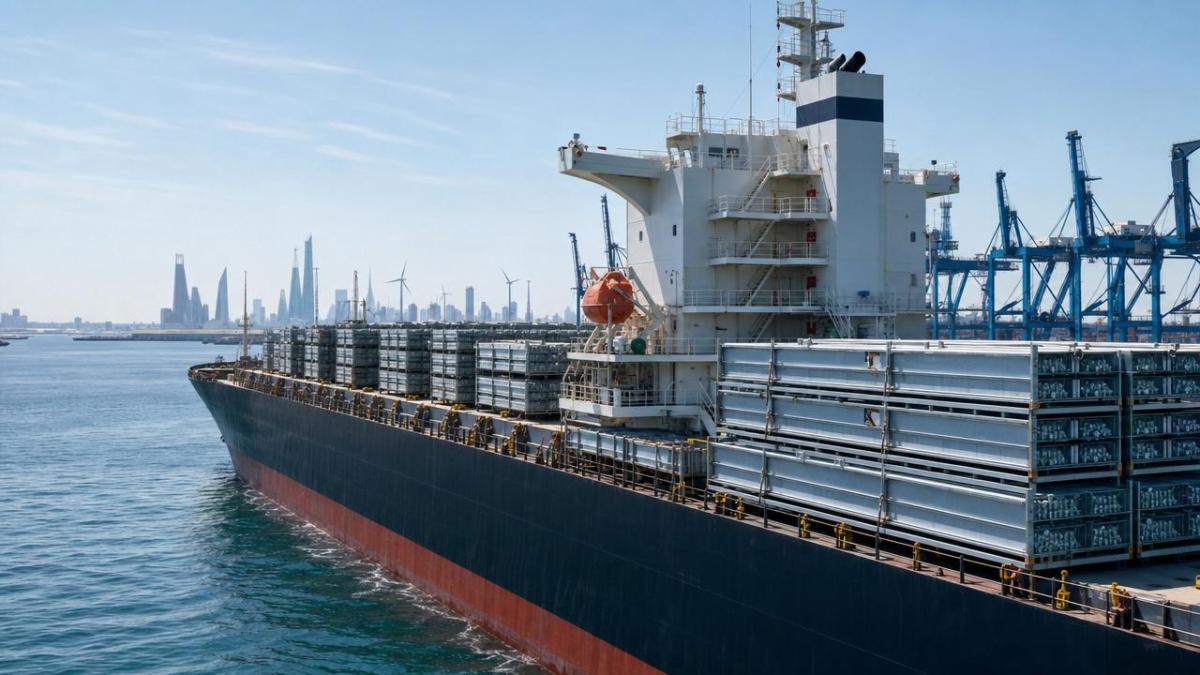
As confirmed on March 16, 2026, commercial shipping through the Strait of Hormuz declined by 94% compared to pre-escalation levels. Global carriers Maersk and MSC suspended all transits via the strait. Vessels are now rerouting via the Cape of Good Hope, extending Asia–Europe maritime transit time by 10–14 days. This has delayed export shipments of high-strength bolts and curtain wall embedments bound for large-scale construction projects in the Middle East. Several leading Chinese fastener manufacturers have activated pre-positioned inventory plans at Dubai and Jeddah distribution hubs.
Industries Affected
Direct Export Trading Firms
Exporters of structural fasteners—especially those supplying high-strength bolts and embedded anchoring systems—face extended lead times due to mandatory rerouting and port congestion. The delay affects order fulfillment cycles, contract compliance timelines, and customer trust metrics, particularly where just-in-time delivery is stipulated.
Raw Material Procurement Units
Procurement teams sourcing steel billets or alloy feedstock from Asian mills may experience secondary delays if upstream suppliers rely on the same disrupted shipping lanes for raw material imports. While not directly cited in the event summary, this linkage is observable given tight integration between global steel and fastener supply chains.
Manufacturing Contractors & EPC Firms
Engineering, procurement, and construction (EPC) contractors working on NEOM, Masdar City, or similar mega-projects face schedule compression risk. High-strength bolts are critical for structural integrity in high-rise façades and modular infrastructure; delivery slippage may trigger sequencing adjustments across civil, mechanical, and façade installation workstreams.
Regional Logistics & Distribution Providers
Third-party logistics providers operating in the Gulf region are adjusting warehouse allocation, customs clearance protocols, and last-mile coordination. The activation of Dubai/Jeddah local warehousing by Chinese fastener exporters signals a shift toward buffer stock models—a trend that increases demand for bonded storage capacity and cross-border documentation support.
What Enterprises and Practitioners Should Monitor and Do Now
Track official maritime advisories and carrier service updates
Monitor real-time notifications from the UK Maritime Trade Operations (UKMTO), U.S. Fifth Fleet, and carrier announcements (e.g., Maersk, MSC). Changes in declared transit risk zones or reactivation of Hormuz sailings will directly affect route planning and freight cost forecasting.
Assess exposure to specific product categories and project milestones
Identify which high-strength bolt grades (e.g., ASTM A325, A490, or EN 15048 variants), sizes, and surface treatments are tied to near-term milestone dates on NEOM or Masdar City contracts. Prioritize air-freight or regional consolidation for time-critical SKUs, even at higher unit cost.
Distinguish between policy signals and operational reality
A suspension of transits does not equate to full closure of the strait under international law. However, current commercial decisions—such as Maersk’s and MSC’s full withdrawal—are de facto constraints. Focus on verifiable carrier actions and port authority notices rather than diplomatic statements alone.
Activate localized inventory buffers and revise safety stock formulas
For firms with existing Gulf-based distribution agreements, review minimum order quantities, duty drawback eligibility, and bonded warehouse availability in Dubai (Jebel Ali) or Jeddah Islamic Port. Adjust safety stock calculations to reflect +10–14-day transit variance—not just historical averages.
Editorial Perspective / Industry Observation
Observably, this event functions less as an isolated incident and more as a stress test of regional supply chain resilience for precision construction components. Analysis shows that while the 94% drop reflects acute operational withdrawal—not legal closure—it has already triggered adaptive behavior among exporters, including forward-deploying inventory. From an industry perspective, the situation is better understood as an early-stage logistical shock with cascading implications for procurement planning cycles, rather than a short-term scheduling hiccup. Continued monitoring is warranted because duration—not magnitude—is the key variable determining whether localized warehousing becomes structural or transitional.
This development underscores how geopolitical volatility increasingly translates into measurable lead-time variance for engineered components in global infrastructure programs. It is not yet evidence of systemic breakdown, but it is a clear signal that traditional maritime routing assumptions no longer hold for time-sensitive construction materials. Current conditions are best interpreted as a temporary but operationally significant recalibration—not a permanent shift, but one requiring active mitigation over the coming weeks.
Source Attribution
Main sources: Public service advisories issued by Maersk and MSC on March 16, 2026; verified transit volume data reported by UKMTO and Lloyd’s List; company statements from three unnamed Chinese fastener exporters regarding Dubai/Jeddah warehouse activation. Ongoing observation is required for updates on U.S. Fifth Fleet navigation warnings, Iranian naval activity reports, and potential resumption of limited transits by non-major carriers.
Recommended News