
Search News
Industry Portal
Hot Articles
High-Rate Batteries: Fast Charge Limits in 2026
Time
Click Count
As high-rate batteries reshape industrial tools, smart hardware, and AIoT infrastructure, charging speed is no longer a simple performance metric.
In 2026, the central issue is whether fast charging preserves safety, cycle life, and dependable output under real operating stress.
This guide explains where fast charge limits appear in high-rate batteries, why those limits matter, and how to judge tradeoffs for demanding applications.
What are high-rate batteries, and why do fast charge limits matter in 2026?
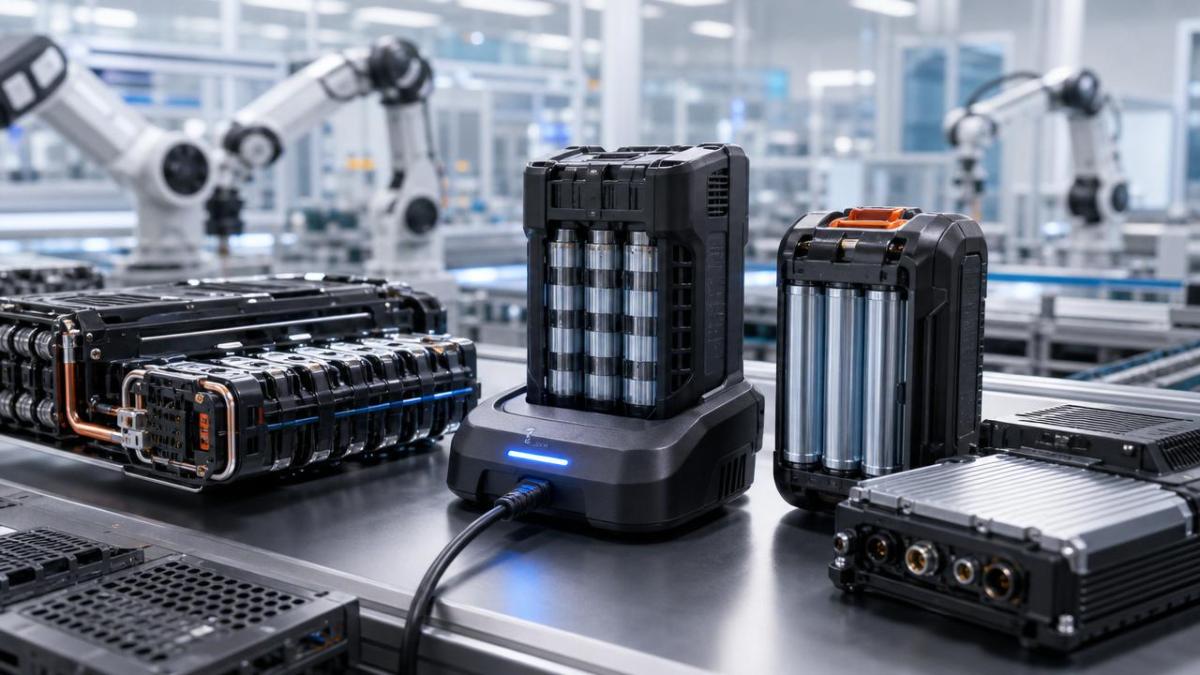
High-rate batteries are cells designed to deliver or accept high current without severe voltage drop or damaging heat buildup.
They are common in brushless power tools, mobile security devices, smart lighting backups, robotics, drones, and edge computing systems.
In these products, uptime matters more than nominal capacity alone.
However, faster charging does not scale endlessly.
Every chemistry has current, voltage, and temperature boundaries.
Once charging pushes beyond them, lithium plating, internal resistance growth, gas generation, and separator stress become more likely.
That means a battery may charge quickly today yet fail earlier tomorrow.
For 2026 systems, fast charge limits matter because field devices increasingly demand both instant readiness and long service intervals.
A battery that recharges in twenty minutes but loses stable torque after several months creates hidden downtime and replacement cost.
What truly limits fast charging in high-rate batteries?
The first limit is heat.
High current raises cell temperature through resistive losses, and those losses increase as packs age or operate in poor airflow.
The second limit is ion transport inside electrodes.
When charging becomes too aggressive, lithium ions cannot intercalate evenly, especially at low temperature or high state of charge.
The third limit is pack architecture.
Even excellent cells perform poorly if busbars, connectors, welds, or thermal interfaces restrict current distribution.
The fourth limit is software control.
Battery management systems must estimate temperature gradients, impedance rise, and charge acceptance in real time.
If sensing is coarse or slow, the pack may exceed safe local conditions before protection reacts.
In practice, fast charge limits are rarely defined by chemistry alone.
They result from chemistry, thermal design, firmware, charger quality, and the duty cycle of the device using the pack.
Key constraints to check
- Cell chemistry and C-rate tolerance
- Ambient and pack temperature during charging
- Internal resistance and aging profile
- Connector, cable, and charger losses
- Balancing accuracy in multi-cell packs
Which applications feel fast charge limits most strongly?
Not every system experiences high-rate batteries the same way.
Limits become more visible where repeated high discharge meets short recovery windows.
Industrial brushless tools are a clear example.
They demand bursts of extreme current, then often return to charging immediately between shifts or tasks.
Biometric access devices and mobile security terminals face another challenge.
They may need high availability, reliable backup power, and safe operation in enclosed housings with limited cooling.
Smart lighting and edge AIoT gateways also matter.
These systems may not draw tool-level peak current, but they often require long calendar life and predictable maintenance intervals.
For PPE support systems, portable inspection gear, and remote sensors, charging convenience can be vital in harsh environments.
Yet harsh heat, dust, and vibration reduce the margin for charging abuse.
Applications where high-rate batteries need stricter evaluation
- Cordless fastening and drilling platforms
- Portable biometric readers and access devices
- Emergency smart lighting and edge controllers
- Inspection robots, drones, and field service kits
- Rugged industrial handheld equipment
How can fast charging reduce cycle life or safety in high-rate batteries?
The most misunderstood issue is that failure is often cumulative, not immediate.
A pack may pass normal acceptance tests and still degrade rapidly after repeated aggressive charging.
Cycle life falls when the electrode structure suffers repeated stress from fast ion insertion and elevated temperature.
As resistance rises, charging becomes less efficient and discharge heat worsens.
That feedback loop eventually affects runtime, peak power, and charging speed itself.
Safety risk increases when fast charging occurs in cold conditions, enclosed spaces, or packs with poor cell matching.
Under those conditions, some cells reach harmful local states before average pack readings appear dangerous.
For high-rate batteries, the practical warning signs include swelling, rising pack temperature, slower balancing, and unusual runtime loss.
Ignoring those signs often turns a charging strategy into a maintenance problem.
Common mistakes
- Assuming a high discharge rate means unlimited fast charge capability
- Evaluating charge speed without checking end-of-life power delivery
- Testing only room-temperature charging
- Using generic chargers with limited communication control
- Focusing on cell data sheets while ignoring pack thermal design
How should high-rate batteries be evaluated before selection?
A useful evaluation starts with the actual duty profile, not brochure claims.
Define peak current, average current, rest periods, ambient range, charging window, and expected service life.
Then compare high-rate batteries using application-specific tests.
The best method measures three things together: charge time, temperature rise, and retained capacity after repeated cycles.
It also helps to examine power retention at end of life.
A pack that still holds capacity but cannot support torque spikes or radio transmission peaks may still be unsuitable.
For integrated smart hardware, charging policy should be validated with firmware behavior, enclosure ventilation, and charger communication protocols.
This is especially important for connected products expected to operate unattended.
What is the smartest 2026 strategy for balancing speed, safety, and cost?
The smartest approach is not maximum charge speed.
It is optimized charge speed within the safe operating envelope of high-rate batteries.
In many systems, a moderate fast charge profile creates better lifetime value than an extreme one.
That is because lower thermal stress preserves output consistency, reduces replacement frequency, and simplifies compliance risk.
For industrial and smart infrastructure products, battery policy should connect with total system design.
That includes thermal pathways, charger intelligence, firmware updates, field diagnostics, and maintenance scheduling.
When high-rate batteries are selected this way, they support both efficient empowerment and absolute safety across tools, security devices, and resilient city hardware.
Practical action steps
- Define acceptable charge time by operational need
- Validate high-rate batteries under hot and cold conditions
- Compare cycle life under realistic fast charge patterns
- Review charger, firmware, and pack thermal integration together
- Prioritize stable power delivery over headline recharge speed
In 2026, fast charge limits are becoming a strategic design question, not just a battery specification line.
A careful review of high-rate batteries should ask how quickly they charge, how safely they age, and how reliably they power the application over time.
Use these checkpoints to build stronger battery decisions for industrial tools, security systems, smart lighting, and connected field hardware.
Recommended News