
Search News
Industry Portal
Hot Articles
Bluetooth Keyless Entry Systems: What to Check Before Choosing One
Time
Click Count
Bluetooth keyless entry systems have moved beyond convenience hardware. They now sit inside broader access control strategies shaped by mobile identity, building automation, and physical security risk.
That shift matters in commercial buildings, industrial facilities, data-sensitive sites, and smart city projects. A poor selection can create unstable access, blind spots in auditing, and expensive retrofit work.
A strong selection process looks past app design and lock aesthetics. It tests whether the system can secure doors consistently, fit existing infrastructure, and scale without weakening control.
Why Bluetooth access is getting closer scrutiny
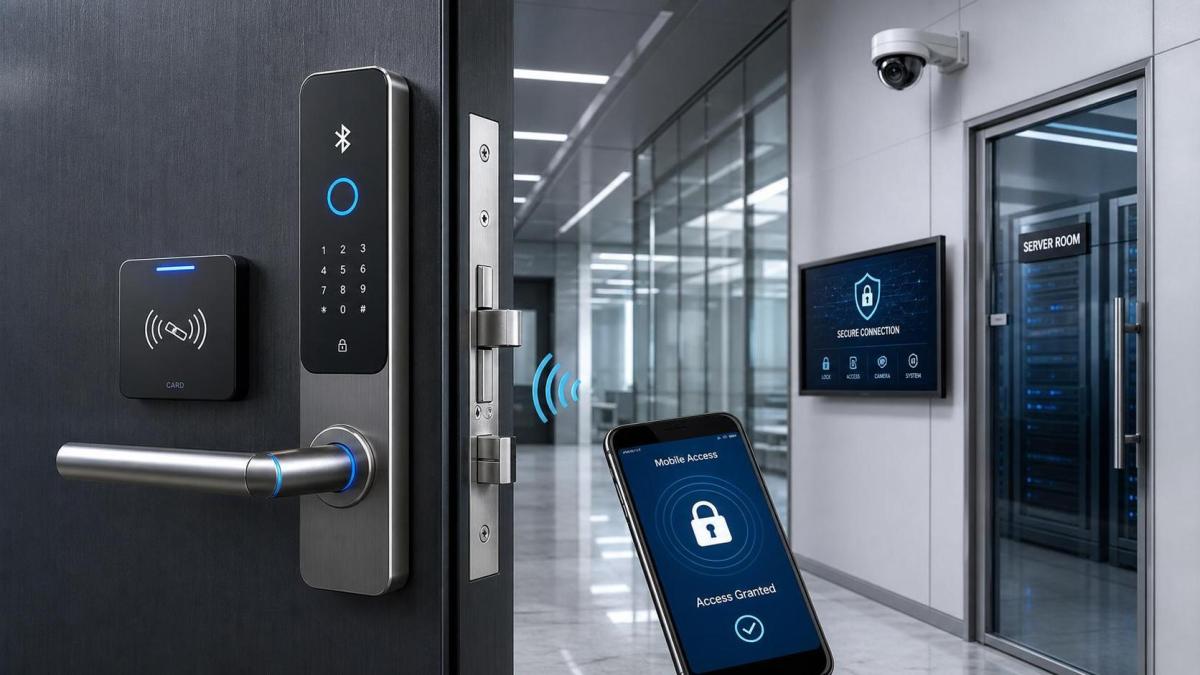
In the wider SHSS view of smart hardware, doors are not isolated products. They connect with biometric security, edge devices, lighting controls, occupancy logic, and incident response workflows.
Bluetooth keyless entry systems are attractive because they reduce key handling, support mobile credentials, and simplify temporary permissions. They also align with AIoT deployments where access data feeds larger facility intelligence.
Yet Bluetooth alone does not guarantee reliable security. Signal behavior, credential architecture, encryption, and system governance decide whether the platform is useful in daily operations or risky under pressure.
What these systems really include
At a basic level, Bluetooth keyless entry systems replace or supplement physical keys with digital credentials stored on phones, cards, wearables, or managed apps.
The door hardware is only one layer. A complete system usually includes credential issuance, user provisioning, firmware management, audit logs, policy controls, and integration with a central access platform.
Some deployments are standalone. Others connect with cloud dashboards, on-premise controllers, video systems, visitor management, or biometric readers. That difference changes both the risk profile and the evaluation method.
Common deployment models
- Standalone smart locks for offices, rental units, or internal doors.
- Networked commercial locks linked to access management software.
- Hybrid systems combining Bluetooth, NFC, PIN, and biometric verification.
- High-security entries using Bluetooth for convenience and a second factor for final authorization.
The checks that matter before choosing one
Selection should focus on operational behavior, not brochure claims. The following areas usually separate a suitable platform from one that causes support and security issues later.
Connection stability and door response
Bluetooth keyless entry systems must unlock quickly and predictably. Delays of even two or three seconds become a serious problem at busy entries, loading areas, or shift-change points.
Check performance in real environments, not just demos. Metal doors, reinforced frames, nearby machinery, and dense wireless traffic can affect signal quality and user experience.
Encryption and credential protection
The core question is how the system protects credentials in transit, at rest, and during enrollment. Strong encryption is expected, but implementation details matter more than marketing labels.
Review secure pairing methods, key rotation practices, credential revocation speed, and resistance to replay or relay attacks. For sensitive environments, ask how the platform behaves during device compromise.
Mobile credential lifecycle
A system is only as manageable as its credential workflow. Provisioning should be fast, revocation should be immediate, and policy changes should appear across devices without manual intervention.
This becomes critical where contractors, temporary staff, service vendors, or rotating teams need time-limited access. Weak lifecycle control often creates hidden exposure long after an assignment ends.
Integration with existing infrastructure
Bluetooth keyless entry systems rarely operate alone in serious facilities. They may need to exchange events with video surveillance, alarm systems, building management software, or identity platforms.
Integration affects both efficiency and incident handling. If access logs cannot align with camera timelines or central dashboards, investigations become slower and compliance reporting becomes harder.
How different environments change the decision
The right answer for a coworking suite is different from the right answer for a factory gate or a data room. Environmental pressure changes what should be prioritized.
In mixed-use facilities, interoperability becomes even more valuable. Access control may interact with smart lighting, occupancy zones, and emergency procedures, especially in modern campuses and municipal assets.
Security questions that should not be skipped
Bluetooth keyless entry systems are often judged on convenience first. A better approach is to treat them as digital perimeter tools with the same seriousness given to servers, cameras, and identity databases.
Ask about failure behavior
What happens if the phone battery dies, firmware corrupts, network sync fails, or the cloud service is unavailable? The fallback path should be explicit, tested, and documented.
Review compliance exposure
If the platform stores identity data, location-linked logs, or biometric pairings, data governance becomes part of the access decision. Regional privacy obligations may affect architecture and vendor selection.
Check update discipline
A smart lock without dependable firmware support can become a long-term liability. Review patch cadence, disclosure policy, signed updates, and device support duration before approval.
Operational value beyond opening doors
When chosen well, Bluetooth keyless entry systems improve more than entry speed. They can reduce rekeying costs, shorten onboarding, tighten access windows, and produce cleaner event records.
That value is strongest where access rights change often or where multiple contractors share the same site. Digital credentials create better traceability than unmanaged physical keys.
For organizations influenced by the SHSS perspective, this also supports a broader hardware strategy. Smart access works best when it aligns with hardened doors, dependable power tools during installation, and resilient site safety design.
A practical evaluation framework
A short pilot often reveals more than specification sheets. The goal is to see whether Bluetooth keyless entry systems remain dependable under realistic pressure.
- Test unlock time across different phones, door materials, and traffic conditions.
- Verify revocation speed for lost devices and expired temporary credentials.
- Inspect logs for timestamp accuracy, event detail, and export options.
- Review API or software compatibility with current access and video systems.
- Confirm emergency override, offline mode, and maintenance procedures.
- Evaluate total cost across hardware, software, support, and future expansion.
It also helps to rank each requirement by site criticality. A retail back office, a school perimeter, and a server room should not inherit the same tolerance for delay or failure.
Where to focus next
The most useful next step is to turn general interest into a site-specific checklist. Map each door type, risk level, credential group, and integration need before comparing vendors.
From there, Bluetooth keyless entry systems can be judged on measurable fit rather than feature volume. That usually leads to better security, fewer operational surprises, and a cleaner path to future expansion.
In practice, the best choice is rarely the one with the longest feature list. It is the one that proves stable access, disciplined security, and manageable growth across the real environments it must protect.
Recommended News