
Search News
Industry Portal
Hot Articles
Biometric Data Compliance for Workplaces: Key Rules and Risk Gaps
Time
Click Count
Biometric data compliance for workplaces has moved from a technical side issue to a governance concern with direct legal, operational, and reputational impact. As access control, attendance systems, and smart security platforms spread across offices, factories, logistics sites, and critical facilities, the rules around facial, fingerprint, iris, and voice data have become harder to ignore. For organizations working at the intersection of physical security and connected infrastructure, the real challenge is no longer whether biometric tools work, but whether they are being deployed in a lawful, proportionate, and defensible way.
Why workplace biometric compliance now demands executive attention
Enforcement has intensified across major jurisdictions.
Regulators are questioning not only data breaches, but also unnecessary collection, weak consent models, vague retention periods, and poor vendor controls.
That matters in any environment using smart access, workforce management, or site security.
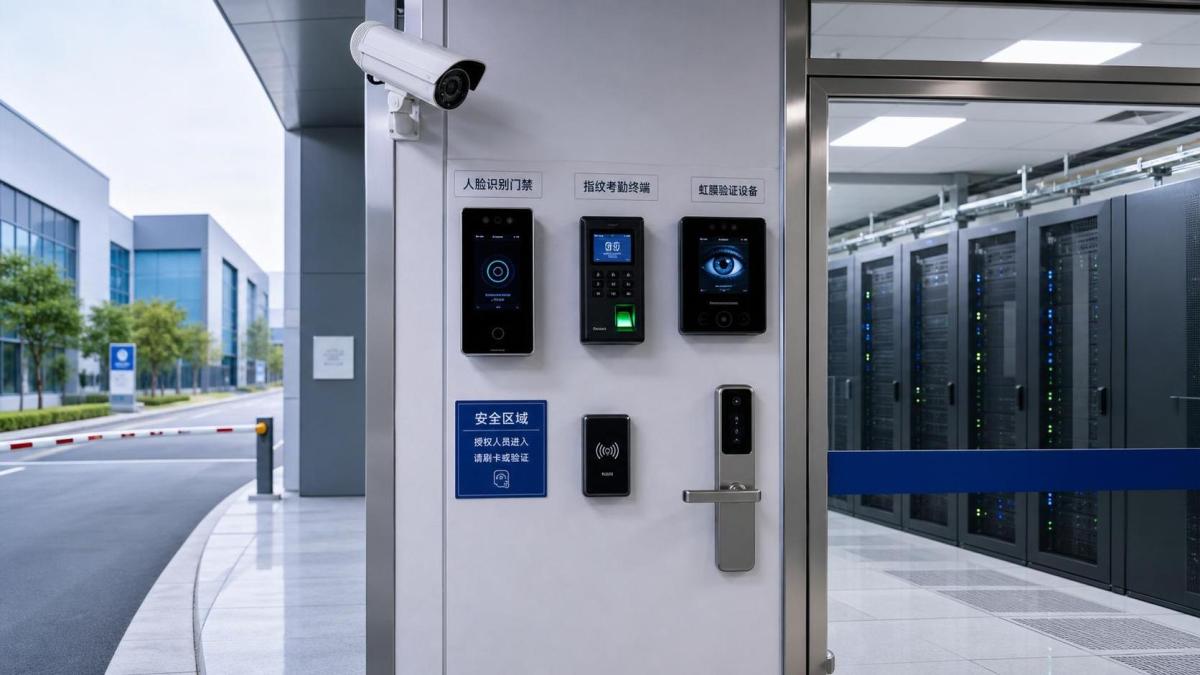
A facial scan at a data center gate, a fingerprint reader on a factory floor, or iris-based entry for restricted labs may improve speed and control.
At the same time, each deployment creates a sensitive data trail that can trigger regulatory scrutiny.
This is especially relevant in AIoT-heavy sectors, where hardware, software, cloud storage, and building systems are increasingly connected.
In that setting, biometric data compliance for workplaces becomes part of a broader resilience strategy, not just a privacy checkbox.
What counts as biometric data in practice
Not every image or identity record is biometric data in the legal sense.
The risk rises when physical or behavioral traits are processed to uniquely identify a person.
Typical examples include:
- facial recognition templates used for entry management;
- fingerprint scans for time and attendance;
- iris or retina matching for high-security zones;
- voiceprints used in secure verification workflows.
The distinction between a raw image and a biometric template is important.
Templates may seem less intrusive because they are mathematical representations.
Regulators usually still treat them as highly sensitive when they enable unique identification.
That is why biometric data compliance for workplaces starts with accurate data mapping.
The rules are converging, even when laws differ
The legal vocabulary changes by region, but the core compliance logic is increasingly similar.
Organizations are expected to justify collection, limit use, secure storage, and document decisions.
Several themes appear repeatedly across GDPR, state privacy laws, labor guidance, and sector-specific controls.
For companies operating globally, the safest assumption is that biometric systems require a higher standard of control than ordinary HR data.
Where risk gaps usually appear
The biggest compliance failures are often hidden in implementation details.
A workplace may purchase a strong biometric device, yet still create exposure through process design.
Consent is often overestimated
In employment settings, consent may not be freely given.
If access to work depends on scanning, the legal basis may need to rest on necessity, legitimate interest, or statutory grounds instead.
Vendors can widen liability
Cloud-hosted matching engines, maintenance providers, and system integrators may all touch sensitive data.
Without clear contracts, audit rights, and deletion terms, accountability becomes blurred.
Function creep is common
A system installed for secure entry may later feed attendance analytics, visitor screening, or behavior tracking.
That kind of expansion can break the original compliance logic.
Technical performance matters legally
False matches, demographic bias, liveness weaknesses, and spoofing vulnerability are not only engineering issues.
They affect fairness, proportionality, and incident exposure.
Why this matters across industrial and smart infrastructure settings
Biometric data compliance for workplaces is especially relevant where physical security and operational continuity are tightly linked.
That includes manufacturing plants, logistics hubs, commercial buildings, utility sites, and smart city assets.
In these environments, identity is part of the safety chain.
A failed identity control can open the door to theft, sabotage, safety incidents, or unauthorized entry to hazardous areas.
This is where the SHSS perspective is useful.
Smart access systems do not operate in isolation.
They sit alongside industrial hardware, building controls, smart lighting, protective equipment, and physical infrastructure that all support site resilience.
A biometric checkpoint at a restricted workshop, for example, may interact with connected locks, surveillance, emergency lighting, and PPE access rules.
Compliance therefore has to reflect the full operational context, not only the scanner on the wall.
A practical way to evaluate workplace deployments
A useful review starts with a simple question: is biometric collection necessary for this exact control point?
If a badge, PIN, or mobile credential can achieve the same result with lower risk, biometrics may be hard to justify.
When biometrics are justified, five checks deserve attention:
- Define the narrow purpose for each device and workflow.
- Confirm where templates are stored: on device, on premises, or in the cloud.
- Establish retention and deletion triggers before rollout.
- Review liveness detection, anti-spoofing, and fallback authentication methods.
- Document vendor responsibilities, incident response, and cross-border transfer controls.
In actual use, the fallback path matters more than many teams expect.
A secure alternative is needed for injuries, failed scans, protective gloves, face coverings, or environmental interference.
Without that, the system may undermine both security and labor fairness.
Governance signals that separate mature programs from risky ones
Strong biometric data compliance for workplaces usually shows up in governance before it shows up in hardware specifications.
The better programs tend to share several traits.
- Privacy impact assessments are completed before procurement, not after installation.
- Security, legal, HR, and facilities teams review the same workflow together.
- Biometric matching thresholds are tuned and periodically tested.
- Edge devices receive patching, credential control, and tamper monitoring.
- Workers and visitors receive clear notices explaining use, limits, and retention.
These measures reduce legal uncertainty, but they also improve procurement quality.
They force a clearer comparison between systems that merely look advanced and systems that can withstand audit, scale, and incident review.
What to assess next
For any organization reviewing biometric data compliance for workplaces, the next step is not a generic policy refresh.
It is a site-by-site assessment of why biometric identification is being used, what exact risk it solves, and whether controls match that level of sensitivity.
That review should connect legal rules with physical operations, vendor architecture, and business continuity expectations.
In environments shaped by smart hardware and critical infrastructure, the strongest position comes from treating biometric systems as part of the last line of defense.
When deployment logic, data governance, and technical controls align, biometric tools can support security without creating avoidable exposure.
That is the benchmark worth using before expanding any new rollout.
Recommended News