
Search News
Industry Portal
Hot Articles
Security Compliance Resources for Suppliers: What to Prepare First
Time
Click Count
Security compliance resources for suppliers: where should preparation begin?
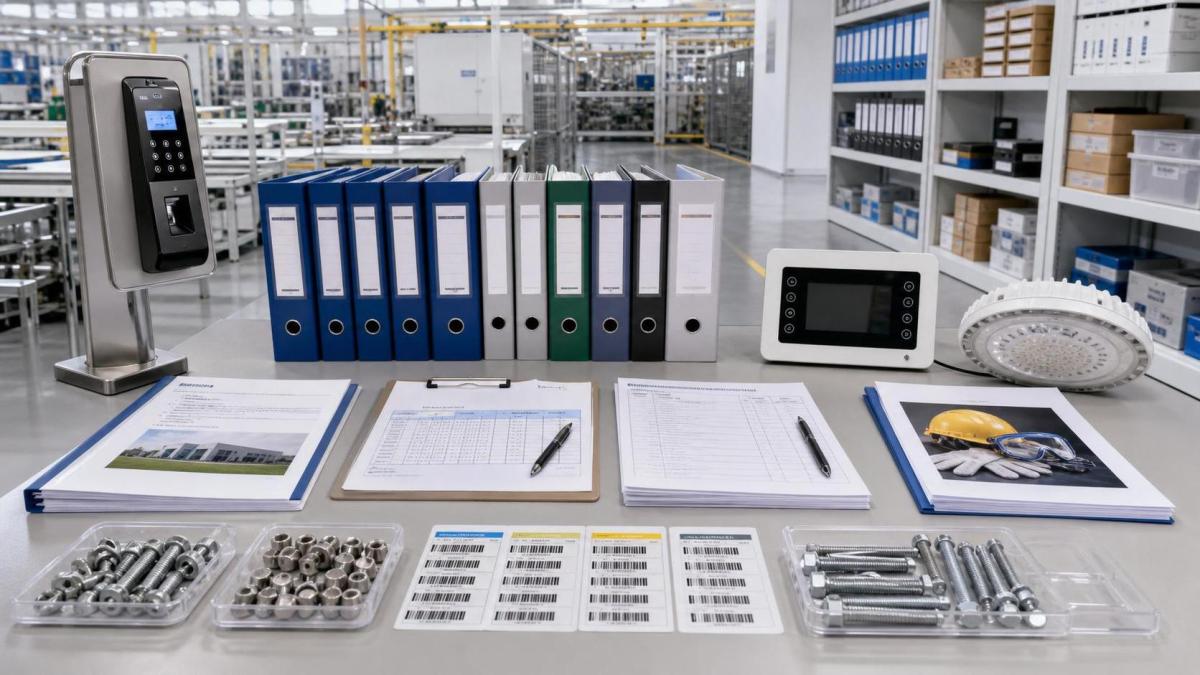
Security compliance resources for suppliers usually fail at the first step: teams collect documents, but not the evidence auditors actually review.
A stronger approach starts with risk visibility, document control, and proof that daily operations match written policies.
That matters across modern supply chains.
A biometric access device, a BLDC tool pack, a structural fastener, a smart lighting controller, and protective gear all create different compliance evidence.
Yet the first questions from customers are often similar.
What standards apply, who controls sensitive data, how is site access restricted, and where are training and incident records?
SHSS often tracks these issues through the lens of physical security, industrial reliability, and operational resilience.
In practice, the best security compliance resources for suppliers connect product integrity with access control, worker protection, and traceable governance.
What counts as security compliance resources for suppliers in real audits?
Think beyond certificates alone.
Most audit teams want a package of policies, records, technical controls, and evidence that shows repeatable discipline.
For suppliers serving construction, industrial hardware, smart buildings, or security systems, that package often includes the following:
- Current certifications, such as ISO 9001, ISO 27001, ISO 45001, or product-specific conformity documents.
- Documented access control rules for facilities, servers, tooling areas, labs, and visitor management.
- Data handling procedures for biometric templates, test data, firmware files, and customer drawings.
- Training records covering cyber hygiene, machine safety, PPE usage, and emergency response.
- Corrective action logs, nonconformance reports, and incident investigation files.
- Traceability records for materials, parts, calibration, lot control, and shipment release.
The mix changes by product type.
A biometric terminal requires tighter privacy controls than a mechanical anchor bolt, while a respirator line needs deeper evidence around workplace hazards and fit testing.
That is why useful security compliance resources for suppliers are always tied to actual operational exposure.
Which files should be prepared first when time is limited?
Start with the files that answer three audit concerns quickly: control, traceability, and response.
If those are weak, the review usually expands.
A practical first-wave checklist looks like this:
This order helps because it covers both cyber-facing and plant-floor risks.
For example, smart lighting gateways and biometric devices raise system access questions, while fasteners, tools, and PPE add traceability and safety obligations.
Well-structured security compliance resources for suppliers let reviewers move from policy to proof without chasing missing links.
Are certifications enough, or do buyers expect more operational proof?
Certifications open the door, but they rarely close the assessment.
Buyers now want operational evidence, especially in AIoT, advanced manufacturing, and critical infrastructure projects.
A certificate says a system exists.
Operational proof shows that the system survives daily pressure, staff turnover, subcontracting, and incident stress.
This gap appears often in physical security supply chains.
A site may claim restricted access, yet badge logs are incomplete.
A factory may claim secure firmware control, yet version approvals are scattered across email.
A PPE producer may claim safety readiness, yet refresher training is overdue.
More mature security compliance resources for suppliers usually include:
- Recent internal audit reports with closed findings.
- Sample traceability records tied to actual shipments.
- Screenshots or logs from access systems, backups, and approval workflows.
- Emergency drill records and contractor onboarding controls.
That extra layer matters because compliance now touches both digital trust and physical protection.
SHSS follows this convergence closely, especially where biometric recognition, industrial hardware durability, and worker safety meet the same project specification.
Where do suppliers most often fail security reviews?
The common failures are rarely dramatic.
They usually come from inconsistencies between departments, sites, and document versions.
One frequent issue is scope confusion.
A certificate may cover one factory, while the audited goods ship from another location with weaker controls.
Another issue is privacy overconfidence.
Suppliers using face, fingerprint, or iris systems sometimes store templates without clear retention rules, lawful basis mapping, or vendor responsibility boundaries.
There is also a plant-floor version of the same problem.
Tool calibration, bolt batch records, lighting controller firmware, and PPE inspection logs may exist, but not in one retrievable chain.
In actual application, the more reliable judgment method is simple: can someone retrieve the right record within minutes, explain ownership, and show the latest revision?
If not, the underlying control is probably weaker than the policy suggests.
That is why security compliance resources for suppliers should be treated as a governed system, not a folder assembled before customer visits.
How should preparation change for biometric security, industrial hardware, and PPE?
Different product lines create different audit priorities, so one template never works well for every case.
For biometric security products, focus on data mapping, privacy notices, consent or lawful basis review, storage security, and third-party processor controls.
For industrial brushless tools and high-strength hardware, reviewers usually care more about test integrity, calibration status, material traceability, and change control.
For smart lighting, network exposure, firmware updates, and field maintenance permissions become central.
For PPE, attention shifts toward hazard communication, inspection frequency, lot tracking, and training proof.
A useful way to organize security compliance resources for suppliers is by risk domain:
- Physical access and site security.
- Information security and privacy.
- Product quality, traceability, and change control.
- Worker safety, PPE controls, and emergency readiness.
This model reflects how integrated projects are now assessed.
A smart city installation may combine access systems, lighting networks, anchors, and protective work procedures in one vendor evaluation.
What is a sensible next step before the next customer audit?
Do a short readiness review before expanding the document library.
Map each major product or service line to its top five security and compliance risks.
Then match each risk to one owner, one controlling procedure, and one evidence source.
That exercise usually reveals the real gaps faster than adding more templates.
It also helps separate mandatory files from useful but secondary records.
If the audit scope includes sensitive identity data, cloud-connected devices, safety-critical hardware, or worker protection, review retention periods, revision control, and subcontractor obligations immediately.
Strong security compliance resources for suppliers are not the longest set of documents.
They are the clearest set of evidence.
When policies, logs, training, and traceability records align, audit risk drops, response speed improves, and trust becomes easier to prove across global projects.
The practical next move is to build a small review matrix, test document retrieval, and verify whether each claimed control can be demonstrated under time pressure.
Recommended News