
Search News
Industry Portal
Hot Articles
Smart Lighting Wholesale Pricing: What Affects Margin and Lead Time
Time
Click Count
Smart Lighting Wholesale Pricing: What Affects Margin and Lead Time
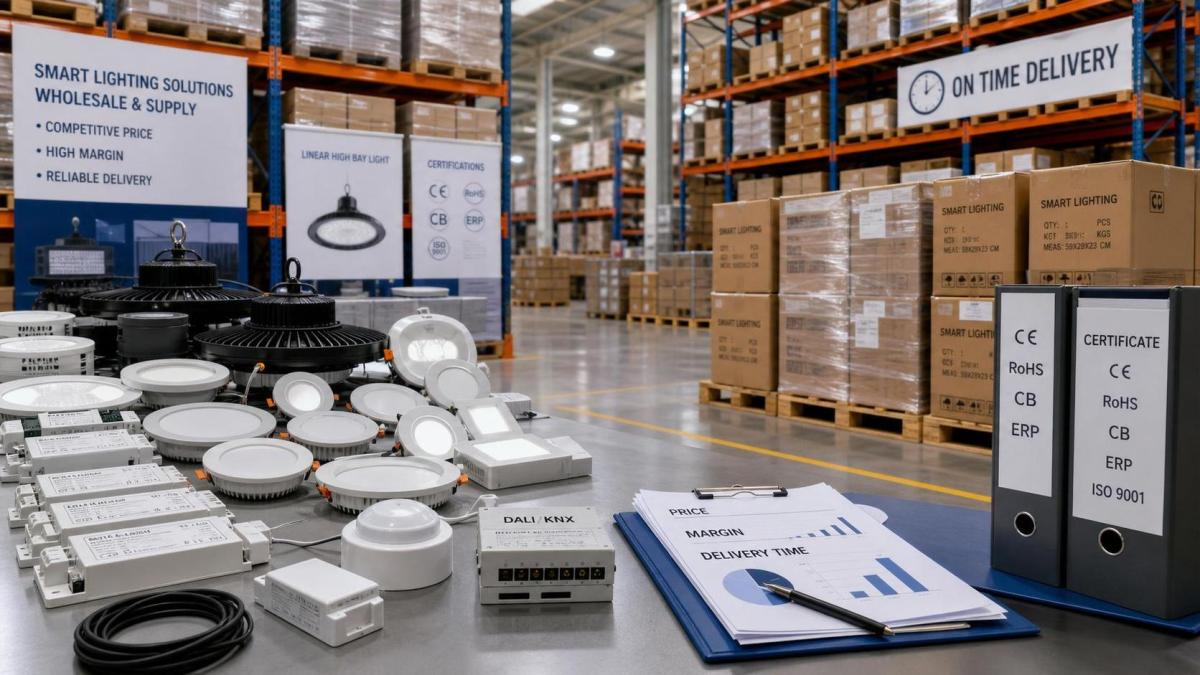
In smart lighting wholesale, pricing is rarely just about unit cost.
A low quote can still damage margin if failures, delays, or certification gaps appear later.
At the same time, a higher quote may create better resale economics when returns stay low and delivery stays stable.
For commercial projects, channel pricing usually reflects technical choices, supply chain structure, and regional compliance.
That is why smart lighting wholesale decisions need cost analysis beyond the fixture itself.
From recent market shifts, the clearer signal is this: buyers are paying more attention to controllability, interoperability, and delivery certainty.
This also means margin depends on how well a supplier aligns product design with project realities.
Why Unit Price Alone Gives a Misleading Picture
In smart lighting wholesale, the invoice price is only one part of the landed cost.
The real margin is shaped by freight, warranty exposure, spare parts planning, and installation compatibility.
A fixture with cheaper LEDs may look attractive.
But if lumen depreciation is faster, the reseller may face service claims much earlier than expected.
The same logic applies to drivers, sensors, housings, and communication modules.
In actual business, a price gap of a few dollars can disappear quickly through field support costs.
Smart lighting wholesale works best when quote comparison includes total ownership impact.
The cost layers worth checking
- LED chip brand, bin consistency, and lumen maintenance
- Driver efficiency, dimming stability, and failure rate
- Control protocol support such as DALI, Zigbee, Bluetooth Mesh, or 0-10V
- Packaging density and shipping cube efficiency
- Warranty terms, claim process, and local technical support
Component Selection Has a Direct Effect on Margin
Component quality is one of the biggest hidden drivers in smart lighting wholesale pricing.
LED engines, drivers, heat sinks, sensors, and enclosures all influence margin in different ways.
For example, branded drivers usually cost more upfront.
However, they often improve dimming reliability and reduce warranty incidents on large commercial jobs.
Thermal design matters just as much.
Poor heat management can shorten driver and LED life, even when lab specifications look acceptable.
More noticeably, project buyers increasingly ask for stable color consistency and flicker control.
Those details affect resale value and brand reputation, which are both part of margin.
Where margins usually improve
Margins improve when the product specification matches the target application instead of overshooting it.
A warehouse bay light does not need the same control package as a premium office luminaire.
A streetlight project may prioritize surge protection, IP rating, and long-life drivers over decorative finish.
This is where disciplined smart lighting wholesale sourcing creates room for better quoting.
Protocol Compatibility Can Raise Cost or Prevent Rework
Control protocol choices often change both the sales price and the delivery timeline.
In smart lighting wholesale, protocol mismatches are a common source of margin loss.
DALI, Zigbee, Bluetooth Mesh, Wi-Fi, and proprietary systems carry different hardware and commissioning requirements.
A lower-cost fixture can become expensive if it needs gateways, firmware revisions, or custom integration work.
That is why compatibility should be reviewed before price negotiation becomes the main focus.
Questions that protect the quote
- Does the fixture support the required protocol natively?
- Are extra controllers or gateways needed?
- Is the software license included or billed separately?
- Will the supplier provide commissioning support?
- Are firmware updates stable across product batches?
These checks help smart lighting wholesale buyers avoid hidden engineering costs after the order is placed.
Order Volume, MOQ, and Mix Strategy Change the Numbers
Volume still matters, but not always in the obvious way.
In smart lighting wholesale, MOQ rules, carton efficiency, and SKU complexity can shift pricing more than simple quantity growth.
A large order spread across many wattages, finishes, and sensor options may cost more to manage.
That can reduce discounts even when the total piece count looks strong.
By contrast, a cleaner product mix can improve factory scheduling and lower procurement risk.
Practical ways to improve buying leverage
- Consolidate overlapping SKUs where possible.
- Separate core fast-moving models from custom project items.
- Ask for tiered pricing by annual forecast, not only by one order.
- Confirm carton quantities and pallet loading before final approval.
This approach often strengthens smart lighting wholesale margin without forcing overstock.
Lead Time Is Often Driven by Coordination, Not Assembly Alone
Many buyers assume lead time depends mainly on factory output.
In smart lighting wholesale, coordination delays are often the bigger issue.
Drivers may come from one supplier, sensors from another, and control modules from a third.
If one component slips, the full shipment can stall.
Custom labels, manuals, and packaging reviews can add more time than expected.
More importantly, protocol testing and aging tests may extend release dates on smart models.
That does not mean the supplier is weak.
It means the schedule should reflect the actual supply chain structure.
Lead time checkpoints to confirm early
- Availability of drivers, chips, sensors, and communication modules
- Sample approval timing for custom versions
- Certification status of the exact configuration
- Packaging artwork confirmation and language requirements
- Booking risk during peak freight periods
Certification Requirements Can Quietly Expand Cost and Delivery Time
Certification is one of the most underestimated variables in smart lighting wholesale.
UL, ETL, CE, RoHS, FCC, DLC, and regional energy standards do not affect every order equally.
But once a project requires them, they become non-negotiable.
A fixture platform may already be certified.
Still, changes to drivers, sensors, wattage, or wireless modules can trigger extra review.
That review can affect both cost and lead time.
In practice, smart lighting wholesale buyers should ask for certification tied to the exact SKU configuration, not only the family name.
A Simple Pricing Framework for Better Procurement Decisions
A useful smart lighting wholesale comparison model should be simple enough to use under time pressure.
It should also be detailed enough to expose risk.
This kind of structure makes smart lighting wholesale decisions faster and more defensible.
What Strong Buyers Usually Do Before Confirming a Supplier
The strongest procurement teams ask sharper questions before negotiating the final discount.
They review sample quality, protocol behavior, certification documents, and packaging assumptions early.
They also test whether the supplier can communicate clearly when details change.
That matters because smart lighting wholesale projects often evolve after the first quote.
A supplier that handles revisions well can protect both timeline and margin.
In the end, better pricing comes from better alignment.
For smart lighting wholesale, the goal is not chasing the cheapest fixture.
The goal is building a quote that holds margin, supports delivery, and survives real project conditions.
A clear cost map, tighter specification control, and early lead time checks usually produce the best result.
Recommended News