
Search News
Industry Portal
Hot Articles
Quantum-Safe Traceability Reaches High-Strength Bolts
Time
Click Count
On June 9, 2026, Sansec announced a quantum-resistant privacy computing appliance that combines SM9 and CRYSTALS-Kyber and has passed certification by the Commercial Cryptography Testing Center of the State Cryptography Administration. The development matters beyond cybersecurity itself because the device is already being used in global traceability systems for high-end equipment supply chains, including Aerospace/Wind Fasteners and High-strength Bolts, where encrypted and tamper-resistant records can directly affect cross-border procurement trust, document handling, and supplier verification.
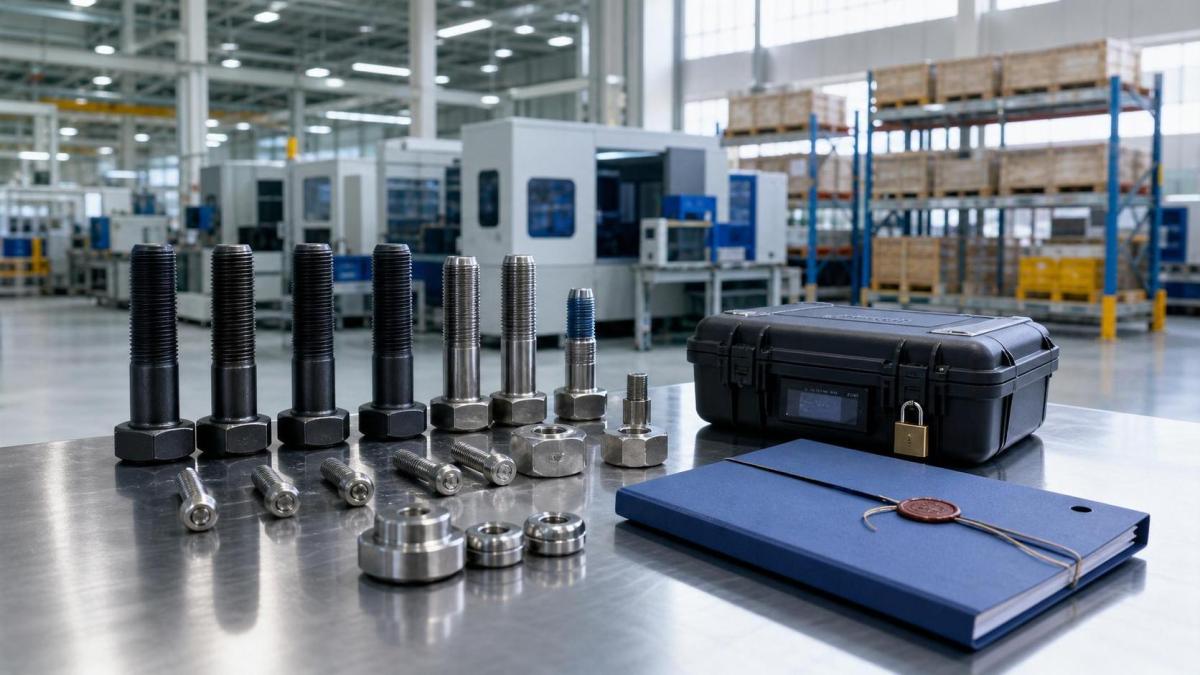
What the June 9 release confirms
According to the provided event information, Sansec released a quantum-resistant privacy computing appliance on June 9. The product uses a hybrid algorithm approach based on SM9 and CRYSTALS-Kyber, and it has been certified by the Commercial Cryptography Testing Center of the State Cryptography Administration.
The same information states that the appliance is being applied in global supply chain traceability systems for high-end equipment sectors, including Aerospace/Wind Fasteners and High-strength Bolts. Its stated use is to provide overseas buyers with encrypted evidence storage for heat-treatment processes, material batches, and stress test reports in a form described as tamper-resistant.
Where supply-chain impact may appear first
Documentation-sensitive export transactions
From an industry perspective, companies involved in direct overseas trade may be affected first because procurement decisions in high-end fasteners often depend on whether process and quality records can be trusted across borders. The practical impact is likely to appear in document submission, buyer review, and traceability disclosure rather than in the physical product itself.
Manufacturers handling critical process records
Analysis shows that processors and manufacturers of Aerospace/Wind Fasteners and High-strength Bolts should watch how heat-treatment files, material batch records, and stress testing documents are managed. If buyers begin paying more attention to encrypted and tamper-resistant evidence, record integrity may become a more visible part of delivery discussions and compliance communication.
Procurement teams and overseas buyers
For procurement-side participants, the immediate relevance is confidence in supplier-provided records. Observably, this type of deployment may matter most in sourcing stages where purchasers need to compare suppliers, verify production claims, or reduce disputes over whether supporting documents have been altered after issuance.
Supply-chain service and traceability operators
Service providers that support traceability workflows may also need to follow this development closely. The event suggests that encryption architecture is becoming more tightly linked to supply-chain proof systems, especially where multiple parties need to view, verify, and retain the same production and testing records.
What companies should watch now
Separate certification facts from commercial rollout
What deserves closer attention is the difference between confirmed certification and broader business adoption. The confirmed fact is that the appliance has passed the named certification and is being applied in relevant traceability systems; companies should avoid assuming that every customer or every market will immediately require the same setup.
Review which records carry the highest trust burden
For businesses in the affected fastener categories, the practical question is which records are most likely to be scrutinized by customers. Based on the provided information, heat-treatment processes, material batch data, and stress test reports are the most relevant document types to review first in internal workflows and supplier communication.
Prepare for buyer questions on evidence integrity
Suppliers and exporters should be ready for more detailed customer questions about how records are stored, presented, and protected from tampering. This is not yet proof of a universal procurement rule change, but it is a signal that document integrity may become a more explicit part of commercial dialogue.
Track follow-up wording and implementation scope
Companies should continue monitoring whether later official or corporate statements clarify scope, sectors, or operating requirements. In practice, the difference between a technology demonstration, a limited deployment, and a standard procurement expectation can materially affect planning for documentation, timelines, and customer commitments.
Why this reads as a signal, not a final industry conclusion
Analysis shows that this news is best understood as an early operational signal at the intersection of cryptography and industrial traceability. The confirmed facts indicate real certification status and real application in high-end equipment supply chains, but they do not by themselves establish a new universal standard across all fastener trade.
Observably, the more meaningful point is that procurement trust for advanced industrial components is being linked more directly to protected digital records. That does not automatically change market practice overnight, but it does suggest that supply-chain encryption may move closer to the center of quality assurance and buyer verification in selected high-requirement segments.
How to read the development at this stage
At this stage, it is more appropriate to understand the announcement as a focused but credible industry marker. It points to rising attention on whether key manufacturing records for Aerospace/Wind Fasteners and High-strength Bolts can be preserved, checked, and presented in a tamper-resistant manner for overseas procurement.
A neutral reading is that the development has immediate relevance for traceability-intensive transactions, while its broader commercial significance still requires continued observation. For industry participants, the core issue is not only the new appliance itself, but also whether encrypted record integrity becomes a more visible expectation in supplier evaluation.
Basis of this article
This article is based on the user-provided news title, event date, and event summary. The specific official source link was not provided in the input, so further verification remains necessary.
For this type of industry update, commonly relevant source categories may include official announcements, company statements, industry association information, authoritative media coverage, and standard-related documents. Follow-up attention should focus on whether additional official wording clarifies implementation scope, application scenarios, or downstream procurement requirements.
Recommended News