
Search News
Industry Portal
Hot Articles
High Strength Bolts: Key Failure Risks in Heavy Structural Connections
Time
Click Count
High Strength Bolts: Key Failure Risks in Heavy Structural Connections
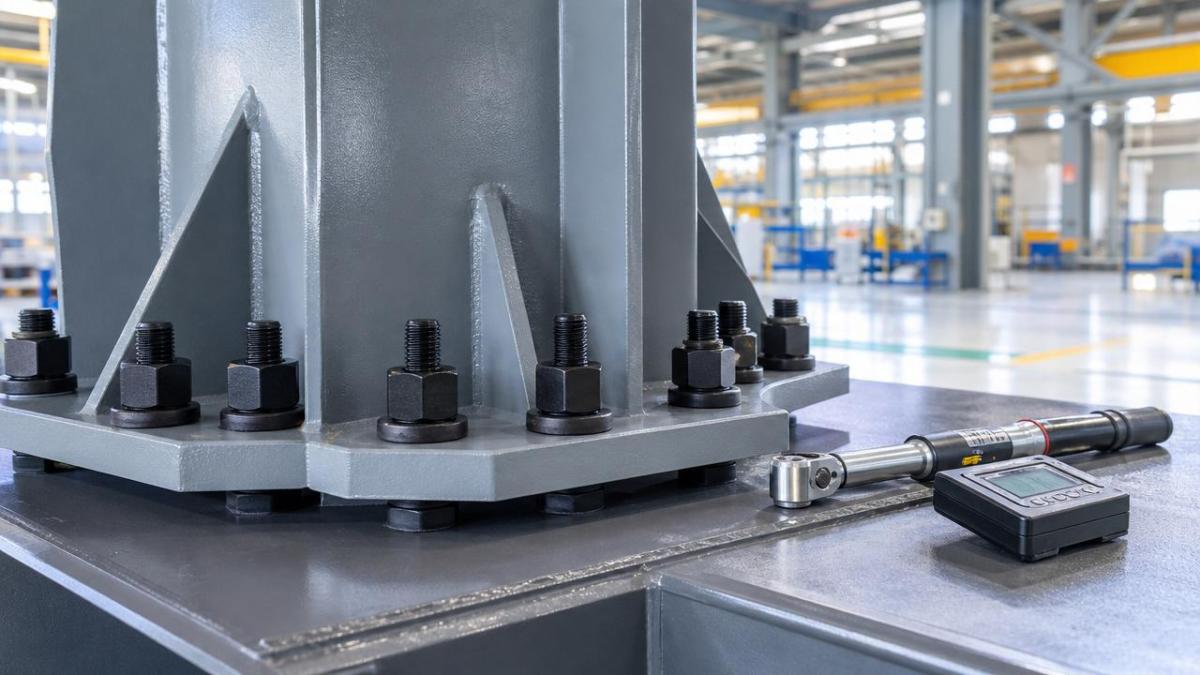
In heavy structural connections, high strength bolts are small components carrying enormous safety consequences across bridges, plants, towers, and machinery.
Failures rarely begin with one dramatic overload. They usually grow from preload loss, fatigue, corrosion, poor inspection, or hidden material defects.
As infrastructure becomes larger and equipment cycles faster, high strength bolts now sit at the center of structural reliability decisions.
Heavy Connections Are Entering a Higher-Risk Operating Era
The operating environment for heavy joints is changing. Loads are less predictable, maintenance windows are shorter, and vibration exposure is rising.
Wind towers grow taller. Industrial plants run continuously. Modular steel construction compresses schedules and increases dependency on field assembly quality.
These changes increase the importance of high strength bolts in slip-critical joints, flange connections, crane rails, and dynamic machinery bases.
A bolt group may appear visually sound while losing clamping force. That silent change can shift load paths inside the connection.
Once slip, fretting, or gap opening begins, high strength bolts may face bending and cyclic tension they were never designed to absorb.
Why Failure Risk Is Increasing Around High Strength Bolts
Several technical and business forces now converge around heavy bolted joints. The result is a narrower margin for installation error.
The most dangerous pattern is confidence without verification. A tightened bolt is not always a correctly tensioned bolt.
Torque values can mislead when thread condition, lubrication, washer hardness, or coating friction differs from the tested condition.
Preload Loss Is the First Warning Behind Many Failures
Preload is the clamping force that allows high strength bolts to keep plates acting as one structural unit.
When preload falls, the joint may slip. Then bolt shanks and threads can experience shear, bending, and alternating tension.
Preload loss may occur after embedment, paint creep, gasket compression, vibration, thermal cycling, or relaxation in connected materials.
Short grip lengths and oversized holes can make this problem worse. Small displacement may produce a large clamping force reduction.
Controls that reduce preload uncertainty
- Use calibrated installation tools and documented verification intervals.
- Match lubrication, coating, and washer systems to approved procedures.
- Apply proper tightening sequence in multi-bolt connections.
- Verify tension, not only applied torque, where safety demand is high.
Direct tension indicators, turn-of-nut methods, and calibrated wrench methods each require discipline. None can compensate for poor surface preparation.
Fatigue Is Becoming a Dominant Concern in Dynamic Structures
Fatigue failure often begins at stress concentrations. Threads, under-head fillets, corrosion pits, and surface defects become crack initiation points.
High strength bolts used in bridges, crushers, conveyors, turbines, towers, and rail systems can see millions of load cycles.
If a slip-critical joint starts sliding, fatigue demand rises sharply. The bolt may become a locating pin instead of a clamp.
This is why joint stiffness, hole quality, faying surface condition, and sustained preload matter as much as nominal bolt grade.
Fatigue risk indicators to watch
- Rust dust or black fretting marks around connected plates.
- Repeated loosening after retightening.
- Cracked paint lines near splice plates or flanges.
- Unusual vibration signatures after equipment speed changes.
When these signals appear, replacing only visible failed high strength bolts may miss the root cause inside the joint.
Corrosion and Hydrogen Risk Demand More Material Discipline
Corrosion reduces cross-section and creates surface notches. In aggressive environments, this turns high strength bolts into fatigue-sensitive components.
Marine structures, chemical plants, mining sites, and cooling towers require careful coating selection and inspection planning.
Hydrogen embrittlement is another critical risk. Higher hardness fasteners can crack under sustained tensile stress after hydrogen exposure.
Pickling, electroplating, cathodic protection, and wet service conditions can introduce or drive hydrogen into susceptible high strength bolts.
The fracture may look sudden and brittle. In reality, it often reflects a chain of process and material control failures.
Material controls gaining importance
- Require heat lot traceability and certified mechanical properties.
- Confirm hardness limits for the selected bolt standard.
- Avoid coating processes that elevate embrittlement risk.
- Use compatible nuts, washers, and corrosion protection systems.
Installation Errors Are Still the Most Controllable Failure Source
High strength bolts depend on correct installation more than many other structural components. Small field deviations can have large consequences.
Common errors include mixed fastener grades, reused tension-control bolts, wrong washers, dirty threads, and uncontrolled lubrication.
Another frequent issue is tightening from one side without considering joint fit-up. This can trap gaps and distort preload distribution.
Field drilling or flame adjustment can also damage hole geometry. Poor holes concentrate bearing stress and accelerate slip.
Inspection Is Moving From Visual Checks to Evidence-Based Assurance
Visual inspection remains useful, but it cannot confirm tension inside high strength bolts. Modern assurance needs stronger evidence.
Digital torque records, ultrasonic tension checks, smart tools, and installation logs are becoming part of serious structural quality systems.
For critical joints, inspection should link each bolt batch to design requirements, installation method, tool status, and final acceptance results.
This mirrors a wider industrial shift. Hardware is no longer judged only by strength, but by verifiable performance history.
What an effective inspection record should include
- Bolt standard, grade, diameter, length, and heat number.
- Nut and washer compatibility confirmation.
- Surface condition and coating description.
- Installation method and tool calibration status.
- Final verification results and nonconformance actions.
Impacts Across Design, Procurement, Assembly, and Maintenance
Design teams must treat high strength bolts as part of a joint system, not isolated components with impressive tensile numbers.
Specification decisions should consider preload method, slip resistance, fatigue category, environment, inspection access, and replacement practicality.
Procurement processes need stronger attention to traceability. Low-cost fasteners without reliable certificates create hidden structural liability.
Assembly planning must protect cleanliness, sequence, and calibration. Maintenance planning must track loosening trends instead of isolated bolt replacements.
In smart industrial environments, high strength bolts may increasingly connect with digital records, sensor checks, and predictive maintenance platforms.
Key Priorities for Safer High Strength Bolts in Critical Joints
The next stage of reliability will come from disciplined systems rather than stronger bolts alone.
- Define joint function before selecting high strength bolts.
- Control preload through approved methods and trained execution.
- Verify coating friction and lubrication assumptions.
- Protect against corrosion and hydrogen embrittlement.
- Maintain traceable records from source to final inspection.
- Investigate repeated loosening as a system warning.
These priorities help prevent the common mistake of treating bolt failure as a simple replacement event.
A Practical Response Framework for Heavy Structural Connections
This framework supports better decisions before failure becomes visible. It also aligns fastening practice with modern risk-based asset management.
Turning Small Components Into Reliable Physical Anchors
High strength bolts are often the physical anchors that hold industrial civilization together under vibration, weather, heat, and time.
Their reliability depends on metallurgy, geometry, friction, installation behavior, inspection quality, and long-term environmental exposure.
The safest organizations will not ask whether high strength bolts are strong enough. They will ask whether the joint system is controlled enough.
For critical projects, review bolt specifications, preload procedures, inspection evidence, and corrosion strategy before the next shutdown or erection phase.
A disciplined audit of high strength bolts today can prevent slip, fracture, downtime, and structural consequences tomorrow.
Recommended News