
Search News
Industry Portal
Hot Articles
High-Strength Fasteners: When Standard Bolts Fail Under Load
Time
Click Count
High-Strength Fasteners: When Standard Bolts Fail Under Load
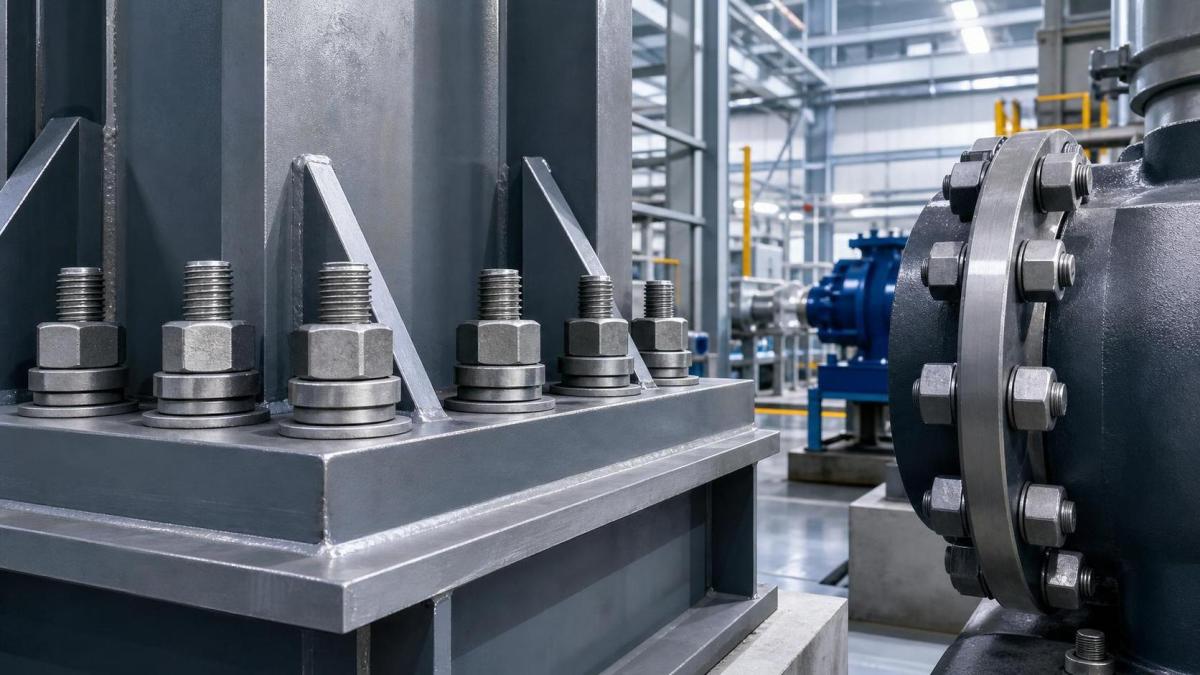
When standard bolts begin to stretch, loosen, or snap under extreme stress, failure is rarely sudden in theory.
In practice, though, it often feels sudden because warning signs were missed or underestimated.
That is why high-strength fasteners matter in heavy equipment, steel structures, rotating assemblies, and vibration-heavy installations.
They are not just stronger bolts.
They are engineered load-transfer components designed to hold clamp force under stress, heat, shock, and repeated movement.
From a technical standpoint, the difference between standard bolts and high-strength fasteners often comes down to preload retention, fatigue resistance, and material performance.
From a practical standpoint, the difference is downtime versus uptime, or near miss versus safe operation.
This article explains why standard bolts fail under load, where high-strength fasteners make the biggest difference, and how to select them more confidently.
It also connects those choices to real operating risks, common standards, and installation factors that are easy to overlook.
Why Standard Bolts Fail Under Heavy Load
Most bolt failures are not caused by one issue alone.
They usually come from a combination of overload, poor preload, vibration, bending, corrosion, and fatigue.
A standard bolt may look fine during assembly but still fail early if the joint design is weak.
The first problem is stretching beyond the elastic range.
Once a bolt yields, clamp force drops, joint movement increases, and the failure process accelerates.
The second problem is loosening under vibration.
Equipment with motors, impact loads, or cyclical motion can slowly unwind a joint that looked secure on day one.
The third problem is fatigue cracking.
Repeated stress cycles create microscopic cracks, often near the first engaged thread or under the bolt head.
Those cracks grow over time until the fastener breaks.
This is why high-strength fasteners are common in bridges, cranes, mining equipment, wind systems, presses, and large industrial frames.
These applications do not tolerate gradual clamp loss or hidden fatigue damage.
Typical failure triggers
- Insufficient tightening torque or incorrect preload
- Shock loads above design assumptions
- Thread damage, poor fit, or reused hardware
- Corrosive environments that reduce cross-section strength
- Joint slip that shifts pure tension into bending stress
What Makes High-Strength Fasteners Different
High-strength fasteners are built to deliver higher tensile strength, better yield performance, and more reliable preload retention.
That usually starts with alloy selection and controlled heat treatment.
It also depends on thread rolling quality, surface condition, and dimensional consistency.
In other words, strength is not just a catalog number.
It is the result of a controlled manufacturing process that supports real joint integrity.
Common examples include ISO property class 8.8, 10.9, and 12.9 bolts, as well as ASTM structural grades such as A325 and A490.
Each grade serves different load, ductility, and environmental requirements.
Choosing between them is about application fit, not simply choosing the strongest option available.
Core performance advantages
- Higher tensile and yield strength for static and dynamic loads
- Better resistance to clamp loss during vibration
- Improved fatigue behavior when properly installed
- More dependable performance in safety-critical joints
- Compatibility with engineered locking and coating systems
Where High-Strength Fasteners Matter Most
Some joints can tolerate occasional retightening.
Others cannot afford even minor movement.
That is where high-strength fasteners move from being a premium option to a basic requirement.
A clear example is structural steel.
Connections in beams, columns, platforms, and support frames depend on stable clamping and predictable shear transfer.
Another example is heavy rotating equipment.
Fans, pumps, compressors, crushers, and conveyors all create repeating forces that punish marginal joints.
Mobile equipment is even more demanding.
Excavators, loaders, drilling rigs, and agricultural machines combine shock, dirt, weather, and uneven loading.
In those environments, standard bolts often fail first at the exact points where maintenance access is hardest.
High-risk application zones
- Structural joints exposed to wind, impact, or seismic movement
- Machines with continuous vibration or reversing loads
- Assemblies exposed to high temperature or corrosive chemicals
- Safety barriers, lifting points, and guarding systems
- Critical enclosures in energy, transport, and industrial plants
How to Choose the Right Grade and Standard
Selecting high-strength fasteners starts with the real load case, not the parts shelf.
First, identify whether the joint sees tension, shear, combined loading, vibration, or thermal cycling.
Then confirm whether the design relies on bolt shear, clamp friction, or both.
This matters because the same fastener grade can perform differently in different joint concepts.
Material environment comes next.
Moisture, salt, chemicals, and elevated temperature can reduce service life even when nominal strength looks adequate.
Coatings, platings, and stainless options help, but they must be balanced against hydrogen embrittlement risk and friction changes.
That is why technical standards remain essential.
They provide a common baseline for mechanical properties, testing, dimensions, and traceability.
Installation Errors That Undermine Strong Fasteners
Even the best high-strength fasteners fail if installation is careless.
This is one of the most common and expensive misconceptions in the field.
A stronger bolt does not fix dirty threads, bad alignment, or guessed torque values.
In fact, higher grades can be less forgiving when assembly practices are poor.
The biggest issue is preload inconsistency.
If friction varies because of coatings, lubrication, or surface roughness, the same torque can produce very different clamping force.
That is why many critical applications use calibrated tightening procedures, load-indicating methods, or controlled angle tightening.
More importantly, they treat the fastener, nut, washer, and joint surface as one system.
Common installation mistakes
- Using dry torque values on lubricated threads
- Mixing mismatched nuts, washers, and bolt grades
- Reusing fasteners designed for one-time tightening
- Ignoring joint relaxation after initial assembly
- Tightening against damaged threads or uneven surfaces
A Practical Checklist for Safer Fastener Decisions
When standard bolts fail under load, the lesson is usually clear.
The joint needed more than a simple replacement.
It needed a better decision about load path, grade, standard, environment, and installation control.
That is where high-strength fasteners prove their value.
They reduce the risk of stretch, loosening, and fatigue when the application truly demands more reliable joint performance.
The key is to specify them with discipline rather than by habit.
In day-to-day operations, a short review process can prevent a long repair event.
- Confirm actual load conditions instead of nominal assumptions
- Match high-strength fasteners to the required standard and grade
- Check corrosion, heat, and vibration exposure early
- Use controlled tightening and verified preload methods
- Inspect joints for relaxation, slip, and repeat failure patterns
In the end, high-strength fasteners are not only about holding parts together.
They help keep structures stable, machines running, and safety margins where they belong.
Recommended News