
Search News
Industry Portal
Hot Articles
Supplier Comparison Platform: 7 Metrics That Expose Hidden Sourcing Risk
Time
Click Count
Supplier Comparison Platform: 7 Metrics That Expose Hidden Sourcing Risk
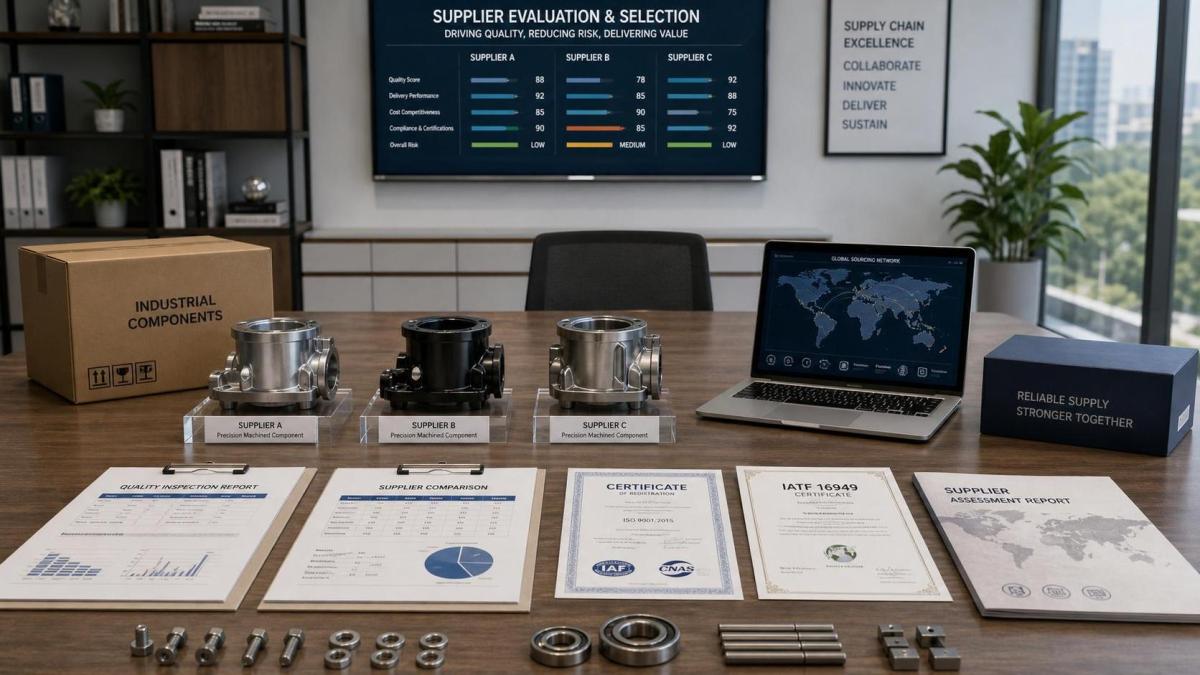
A supplier comparison platform can reveal far more than price gaps or lead times. It can surface weak signals that usually stay hidden until orders slip, audits fail, or field defects appear.
That matters even more in hardware, security systems, industrial tools, fasteners, smart lighting, and PPE. In these sectors, one sourcing mistake can trigger quality loss, compliance exposure, and expensive rework.
A strong supplier comparison platform helps procurement teams compare suppliers with more discipline. It shifts evaluation from surface claims to measurable operational evidence.
The seven metrics below are especially useful when the decision involves safety-critical products, regulated data environments, or complex global manufacturing networks.
1. On-Time Delivery Variability, Not Just Average Lead Time
Many buyers still compare suppliers using quoted lead time alone. That is too shallow for any serious supplier comparison platform.
A supplier may promise 30 days and still create constant planning chaos. The real signal is delivery variability across several orders, seasons, and product lines.
Look for metrics such as delivery consistency, schedule adherence, and order fulfillment by month. A wide spread often points to unstable production control or weak supplier management.
In actual sourcing decisions, this matters more than one fast sample order. Stable timing protects installation schedules, inventory planning, and customer commitments.
- Track promised versus actual shipment dates for at least 12 months.
- Separate standard orders from urgent orders.
- Check whether delays cluster around new models or peak seasons.
2. Quality Escape Rate Across Production and Field Use
A low factory defect rate can look impressive inside a supplier comparison platform. But it does not tell the whole story.
The stronger metric is quality escape rate. This shows how many defects pass through inspections and appear later in assembly, installation, or end use.
For brushless tools, that may mean motor overheating or battery connector failures. For biometric systems, it may involve sensor drift, false rejection, or unstable firmware behavior.
For fasteners and PPE, the consequences are even more direct. A hidden material issue can quickly become a safety issue.
A practical supplier comparison platform should combine incoming inspection data, customer complaints, warranty claims, and corrective action closure speed.
3. Certification Depth and Audit Freshness
Many sourcing teams stop after confirming that a certificate exists. That creates blind spots.
A supplier comparison platform should check certification depth, issuing body credibility, scope coverage, and audit freshness. A valid document is only the starting point.
In security hardware and biometric access control, standards often connect to data privacy, cyber resilience, and physical security performance. Old audits may miss new regulatory gaps.
In smart lighting, EMC, safety, and protocol compliance affect real deployment risk. In PPE, certification without batch traceability is not enough.
Recent changes make this even more important. Regulatory pressure is moving faster than many supplier qualification processes.
- Verify whether the certificate covers the exact product family.
- Review the latest audit date and major findings.
- Confirm who owns test reports for design revisions.
4. Sub-Tier Supply Concentration
A supplier comparison platform becomes much more valuable when it maps sub-tier exposure. Hidden risk often sits one layer below the direct supplier.
Two suppliers may appear independent, yet both may rely on the same casting source, chip vendor, battery cell maker, or textile mill. That weakens supply resilience.
This issue shows up often in BLDC motors, biometric sensors, high-strength alloy inputs, LED drivers, and filtration materials. A single hidden bottleneck can disrupt every approved source.
The better question is not whether dual sourcing exists on paper. The better question is whether upstream dependency is actually diversified.
A robust supplier comparison platform should score suppliers on sub-tier transparency, alternate material paths, and geographic concentration.
5. Engineering Change Discipline
Some of the most expensive sourcing failures come from unmanaged changes. This is where a supplier comparison platform can protect decision quality.
Ask how the supplier handles component substitutions, firmware updates, tooling modifications, and raw material changes. Then ask how those changes are documented and approved.
A disciplined supplier provides revision history, validation records, and impact assessments. A weak one simply says the change does not affect performance.
That difference is critical in products with tight tolerances or safety implications. Think thread geometry, optical sensor calibration, battery management logic, or cut-resistant fabric layers.
In practice, engineering change discipline is one of the clearest signs of long-term supplier maturity.
6. Financial Stability Behind Operational Promises
Operational data matters, but it should not be viewed in isolation. A supplier comparison platform should include financial resilience metrics as well.
A supplier can meet targets today while quietly carrying cash stress, rising debt, or poor working capital control. Those pressures usually surface later as delayed purchases, staffing turnover, or raw material compromises.
This becomes more visible when payment terms tighten or demand becomes volatile. The hidden risk is not only insolvency. It is decision-making under financial pressure.
Useful indicators include revenue concentration, inventory turnover, capital expenditure consistency, and customer mix. Sudden dependence on one major buyer is a warning sign.
When using a supplier comparison platform, combine financial review with plant-level observations. The two views often explain each other.
7. Corrective Action Responsiveness
Every supplier has issues at some point. The decision signal is how fast and how well those issues are contained.
A supplier comparison platform should measure response time, root cause quality, containment effectiveness, and recurrence rate. Speed without depth is not enough.
For example, replacing defective shipments solves an immediate problem. It does not prove the supplier understands why the issue happened.
More meaningful evidence includes updated control plans, retraining records, process capability data, and follow-up verification. Those details separate tactical response from true correction.
This is also where cross-functional review helps. Quality, engineering, and sourcing should all score the same corrective action inside the supplier comparison platform.
How to Use a Supplier Comparison Platform More Effectively
The biggest mistake is treating a supplier comparison platform as a price ranking tool. Cost matters, but isolated cost comparison hides structural risk.
A better approach is to weight metrics by product criticality. Safety-sensitive categories should give more weight to quality escape rate, compliance depth, and change control.
For strategic hardware programs, use a simple decision model:
- Use price as one factor, not the final answer.
- Separate visible performance from hidden resilience.
- Review trends, not one-time snapshots.
- Refresh supplier comparison platform data quarterly.
This also aligns well with complex sourcing environments like SHSS-focused industries, where product reliability, traceability, and operational continuity all carry direct business consequences.
Final Decision Signal
The best supplier comparison platform does not simply tell you who is cheaper or faster. It shows who is more dependable when conditions become less predictable.
That is the real value of these seven metrics. They expose sourcing risk before it becomes a delivery miss, a compliance incident, or a field failure.
When evaluation is grounded in delivery variability, quality escape, audit freshness, sub-tier concentration, change discipline, financial stability, and corrective action strength, supplier selection becomes more defensible.
In procurement decisions that affect safety, uptime, and brand credibility, a supplier comparison platform should function as an early warning system. That is how better sourcing decisions are actually made.
Recommended News