
Search News
Industry Portal
Hot Articles
Supplier Comparison Criteria: 7 Factors That Change Total Cost
Time
Click Count
Supplier Comparison Criteria: 7 Factors That Change Total Cost
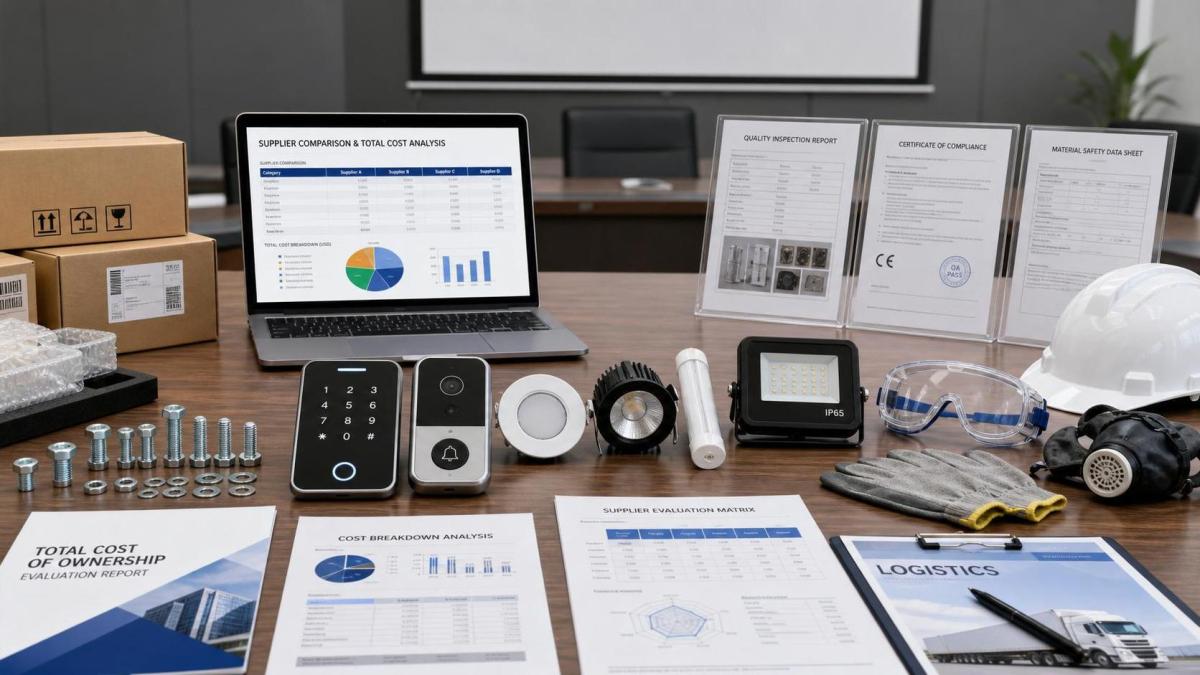
For procurement teams, choosing between suppliers is never just about the lowest quoted price. Strong supplier comparison criteria expose the hidden drivers of cost, risk, and performance.
That matters even more in sectors tied to tools, biometric security, fasteners, smart lighting, and PPE. In these categories, a small sourcing mistake can trigger downtime, failures, claims, or compliance problems.
A better sourcing decision comes from comparing total cost over time. Price still matters, but it should sit inside a broader supplier evaluation framework.
The seven factors below help turn supplier comparison criteria into something practical. They make trade-offs visible and support decisions that protect both cost control and operational continuity.
1. Unit Price Is Only the Starting Point
Many sourcing reviews begin with quoted unit price. That is useful, but weak supplier comparison criteria stop there.
A lower price may hide higher freight, packaging loss, inspection costs, payment risk, or installation inefficiency. In practice, cheap supply often becomes expensive supply.
For example, low-cost fasteners with unstable thread quality can slow assembly. Smart access hardware with unclear firmware support may create later service expenses.
When building supplier comparison criteria, compare landed cost, transaction cost, and usage cost together. That creates a more honest view of supplier value.
- Quoted price and discount structure
- Freight, duties, and packaging cost
- Inspection, rework, and return handling cost
- Labor impact during installation or use
2. Quality Consistency Changes Real Cost Fast
Quality is one of the most important supplier comparison criteria because inconsistency multiplies cost across the whole operation.
One failed batch can trigger production delays, site safety concerns, warranty claims, or damaged customer trust. These costs often exceed the initial savings.
In industrial brushless tools, poor motor control boards may shorten product life. In PPE, material inconsistency can become a direct worker safety issue.
A solid supplier evaluation process looks beyond pass or fail results. It asks whether quality remains stable across lots, seasons, factories, and raw material changes.
- PPM trends and defect history
- Traceability and batch controls
- Corrective action speed
- Third-party test reports and audit discipline
3. Lead Time Reliability Matters More Than Average Lead Time
Lead time is often discussed as a single number. Good supplier comparison criteria treat it as a reliability issue, not just a calendar issue.
A supplier promising 20 days but delivering in 20 to 45 days creates planning instability. That pushes buyers to hold more buffer stock and tie up cash.
This is especially visible in smart lighting projects and security deployments. Missed delivery windows can delay contractor schedules and site acceptance milestones.
More useful supplier comparison criteria measure on-time delivery, forecast accuracy, capacity flexibility, and response during demand spikes.
- Check on-time delivery over at least two or three quarters.
- Review rush order performance, not standard orders alone.
- Ask how they handle component shortages and port disruption.
- Compare lead time promises with actual shipment records.
4. Compliance and Certification Reduce Hidden Exposure
Compliance is often underestimated until a shipment is blocked or a claim appears. That is why compliance belongs near the top of supplier comparison criteria.
Different products carry different exposure. Biometric systems may involve privacy rules. PPE may require strict performance certification. Electrical products need market-specific safety approvals.
A supplier with weak documentation can create customs delays, legal risk, failed tenders, or expensive field replacement. These issues directly change total cost.
Practical supplier comparison criteria should test both current certifications and the supplier’s ability to maintain them as regulations evolve.
5. Technical Support Protects Lifecycle Value
Some suppliers sell a product. Better suppliers support performance after delivery. This difference should be built into supplier comparison criteria.
For advanced categories, technical support affects commissioning speed, troubleshooting time, firmware updates, spare parts planning, and field reliability.
Take smart access systems as an example. If integration support is weak, the buyer may pay external engineers to solve avoidable setup issues.
The same logic applies to BLDC tools, connected lighting, and protective gear with specialized standards. Good support reduces time loss and operating friction.
- Pre-sales application advice
- Installation and commissioning guidance
- Warranty response and spare parts availability
- Engineering support for customization
6. Supplier Risk Profile Should Be Scored, Not Guessed
Recent supply shocks made one point very clear. Supplier comparison criteria must include risk scoring, not informal impressions.
Financial weakness, geographic concentration, unstable sub-suppliers, and poor communication can all raise total cost without changing the quote.
For safety-critical products, risk has even higher stakes. A disruption in certified PPE or access control devices can affect contractual service levels and site readiness.
Effective supplier comparison criteria convert these concerns into measurable signals. That allows a clearer sourcing decision and stronger negotiation posture.
- Assess production location concentration.
- Review dependency on single raw material sources.
- Check financial health and ownership stability.
- Score communication speed during disruptions.
7. Improvement Potential Can Outweigh a Small Price Gap
The best supplier comparison criteria do not only measure current performance. They also test whether a supplier can improve with your business.
A supplier willing to optimize packaging, reduce defects, share forecasts, localize stock, or refine product design may create larger savings over time.
This is especially relevant in categories shaped by rapid technical change. Smart lighting controls, biometric devices, and brushless systems all evolve quickly.
A slightly higher-cost supplier with stronger roadmap alignment may lower future switching cost, reduce obsolescence, and improve market responsiveness.
How to Apply These Supplier Comparison Criteria in Practice
A useful sourcing model gives each factor a weight based on category risk. Commodity items may lean more on cost. Critical items need heavier scoring for quality, compliance, and resilience.
One practical method is to score suppliers across price, quality, lead time, compliance, support, risk, and improvement potential. Then compare weighted totals with notes from audits and trial orders.
This approach makes supplier comparison criteria easier to defend internally. It also helps separate short-term savings from long-term procurement value.
Conclusion
The strongest supplier comparison criteria are not complicated. They simply reflect how total cost is really created in day-to-day operations.
When price is evaluated alongside quality consistency, delivery reliability, compliance, technical support, risk, and improvement potential, sourcing decisions become far more accurate.
Use these seven factors as a working scorecard for the next sourcing review. The result is usually clearer supplier selection, lower hidden cost, and stronger operational confidence.
Recommended News