
Search News
Industry Portal
Hot Articles
Industrial IoT Automation: Where ROI Shows Up First
Time
Click Count
Industrial IoT Automation: Where ROI Shows Up First
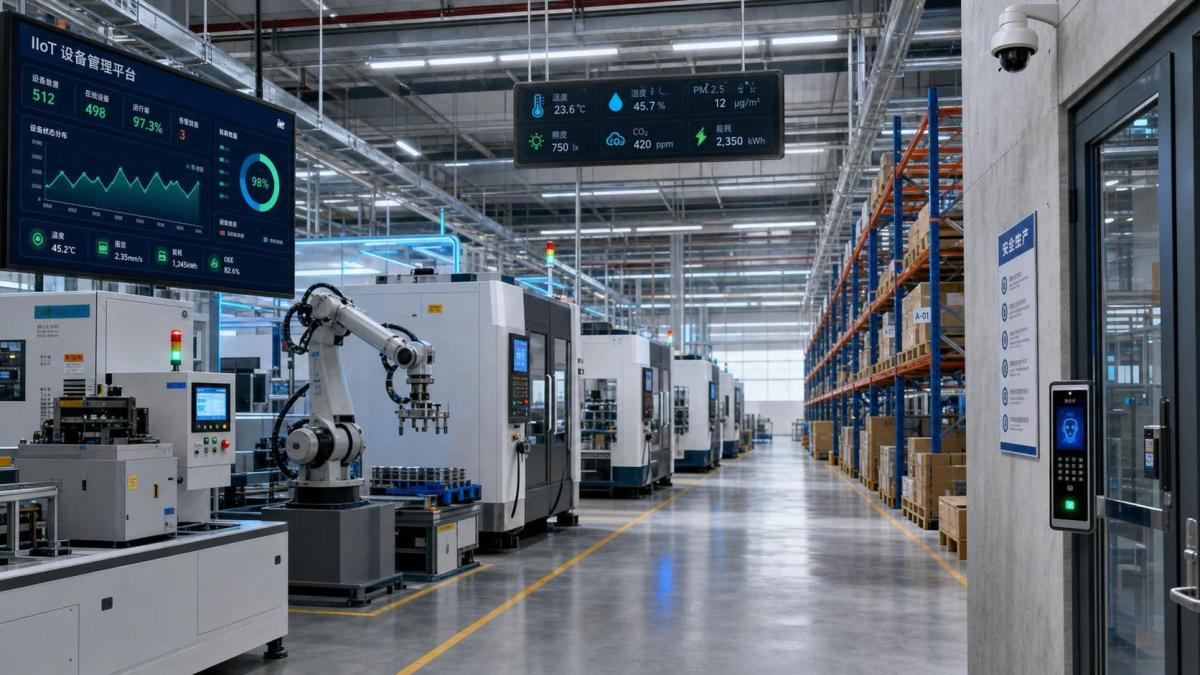
Industrial IoT automation is often framed as a multi-year digital shift.
In practice, the first returns usually come from very specific operational fixes.
That matters when budgets are tight and every capital decision needs a visible payback path.
For companies managing tools, access control, lighting, fasteners, and PPE, industrial IoT automation can improve output without waiting for a full plant overhaul.
The strongest early ROI usually appears where data closes obvious blind spots.
Downtime becomes easier to predict.
Energy waste becomes easier to cut.
Supervisors gain faster visibility into what is actually happening across shifts, sites, and assets.
That is why industrial IoT automation is increasingly a procurement decision, not just an engineering project.
Why early ROI matters more than broad transformation claims
Most buyers are not asking whether industrial IoT automation will matter in five years.
They are asking where value appears in the first two quarters.
This shift in buying behavior is practical.
Leaders want proof that connected hardware will improve margins before they expand across multiple facilities.
The good news is that early benefits are usually measurable.
- Lower unplanned maintenance costs
- Reduced overtime caused by production interruptions
- Better energy efficiency in lighting and equipment use
- Faster incident response in security-sensitive areas
- Stronger traceability for compliance, quality, and procurement reviews
When industrial IoT automation is tied to these outcomes, the business case becomes much easier to defend.
Where industrial IoT automation delivers first returns
1. Downtime reduction in high-use tools and equipment
This is often the fastest win.
Connected brushless tools, compressors, fastening systems, and production assets can report usage patterns, temperature shifts, battery health, and abnormal vibration.
That data helps maintenance teams act before breakdowns stop work.
For procurement teams, the benefit is clear.
Buying a smarter asset can be cheaper than repeatedly paying for emergency replacement, rental coverage, and labor disruption.
2. Energy savings from connected lighting and operating schedules
Industrial IoT automation also shows ROI quickly in lighting.
Smart LED systems using DALI or Zigbee can adjust output by occupancy, daylight conditions, and shift timing.
That means lower electricity use without reducing visibility or safety.
In warehouses, campuses, factories, and municipal projects, this is one of the easiest cost lines to measure monthly.
It also supports longer fixture life and fewer service calls.
3. Access control and security efficiency
Security is sometimes treated as a compliance cost.
But industrial IoT automation can turn it into an efficiency lever.
Biometric access systems reduce manual credential handling, speed up entry management, and strengthen audit trails.
For high-value facilities, the ROI includes avoided breaches, lower guard workload, and better control over sensitive zones.
The measurable gain often comes from faster response and fewer process gaps.
How to evaluate industrial IoT automation before buying
Not every connected product creates meaningful ROI.
The first screening question is simple.
What operational problem will this system solve within the first year?
If the answer is vague, the purchase case is weak.
A practical review should focus on five areas.
- Data relevance: Does the system capture information tied to cost, uptime, energy, or risk?
- Integration effort: Can it work with current workflows, maintenance tools, or access platforms?
- Deployment speed: How quickly can one site or one line go live?
- Scalability: Will the same setup expand across multiple locations without major redesign?
- Compliance exposure: Are data security, privacy, and retention policies clearly addressed?
This is especially important for biometric systems.
A strong industrial IoT automation supplier should explain storage architecture, consent controls, and regional compliance requirements early.
That reduces procurement risk before contracts are signed.
A simple ROI comparison framework
The best industrial IoT automation decisions compare current losses against expected savings.
A short decision table can make that easier.
This approach keeps industrial IoT automation tied to procurement logic instead of abstract innovation language.
Common mistakes that delay payback
Early ROI can disappear when the rollout scope is too broad.
A better path is to start with one high-friction process and prove results there.
Other common problems include buying hardware without adoption planning, collecting data no one reviews, and underestimating cybersecurity requirements.
Industrial IoT automation only works when alerts, dashboards, and maintenance actions connect to daily operations.
If the process stays manual after deployment, the investment will look expensive very quickly.
What smarter buyers are doing now
From recent market behavior, the more disciplined buyers are narrowing their first industrial IoT automation projects to assets with clear failure costs.
They are also choosing suppliers that understand both hardware reliability and operational economics.
That combination matters across SHSS-related categories.
A connected brushless tool needs more than motor performance.
A biometric reader needs more than fast recognition.
A smart lighting system needs more than efficient LEDs.
The winning purchase is the one that performs technically and pays back operationally.
That is where industrial IoT automation is becoming a practical advantage.
It helps organizations move from reactive spending to measurable control.
For teams evaluating cost, risk, and scale, the next step is straightforward.
Map one operational pain point.
Attach one measurable KPI.
Then evaluate industrial IoT automation options against that single outcome first.
That is usually where the first ROI shows up, and where smarter expansion begins.
Recommended News