
Search News
Industry Portal
Hot Articles
How does low-power wireless access extend IoT sensor battery life?
Time
Click Count
Battery replacement can be a major maintenance cost for IoT sensor deployments in industrial facilities, smart buildings, and connected lighting systems.
For technical evaluators, wireless access low power performance is therefore a critical design consideration. The key question is how much energy the complete device uses between useful measurements.
Low-power wireless access extends battery life by keeping the radio asleep, shortening communication events, and avoiding unnecessary transmissions. Results depend on coverage, reporting needs, and hardware behavior.
This article explains the mechanisms, compares common wireless options, and shows how to test whether a proposed solution can meet its battery-life target.
How does wireless access reduce battery drain?
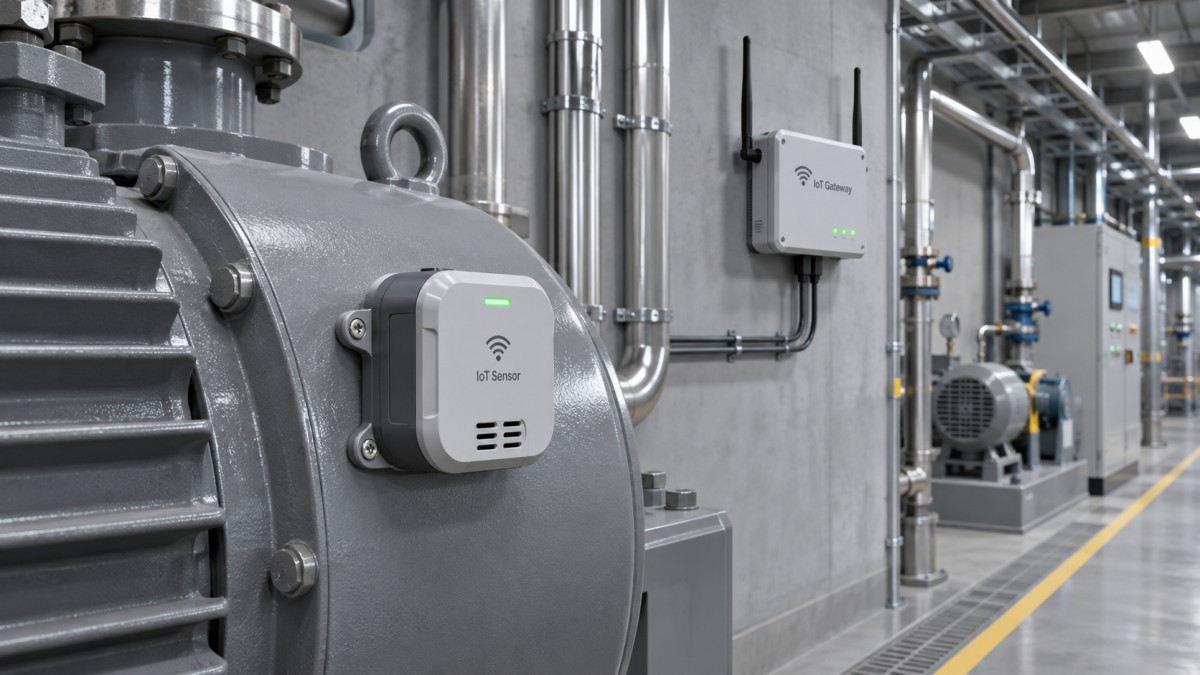
An IoT sensor consumes energy while measuring, processing, transmitting, receiving, and sleeping. Wireless access affects several of these states, including how long the device waits for a network response.
Radios typically draw much more current when transmitting or receiving than when sleeping. A short burst of radio activity can therefore consume more energy than a long idle period.
Low-power designs exploit this difference through duty cycling: the device wakes when needed, exchanges data, and returns to a low-current state for most of its operating life.
The benefit depends on the whole communication cycle. A protocol with a short transmission may still consume substantial energy if the device repeatedly listens, reconnects, or retries failed messages.
For evaluation, compare average current under the intended workload rather than relying on a radio module’s lowest advertised sleep current or its peak transmit current.
Which wireless behaviors have the greatest effect on battery life?
Sleep time and wake-up schedules
Long sleep intervals reduce the proportion of time spent powering the radio and processor. Scheduled wake-ups also let devices avoid continuously listening for incoming traffic.
Sleep is less effective when firmware leaves peripherals active, a regulator wastes current, or a sensor requires continuous heating or measurement. Check the complete board, not only the radio.
Synchronization has a cost too. Some networks require periodic listening or keep-alive messages, so a device that sends data rarely may still wake regularly to remain reachable.
Reporting frequency and payload size
Reducing a report from every minute to every fifteen minutes can substantially lower communication energy, provided the application can tolerate the slower update rate.
For environmental monitoring, reporting meaningful changes instead of every sample can reduce traffic. Keep a periodic heartbeat so operators can distinguish stable conditions from a failed device.
Batching several readings into one message may save connection overhead, but larger packets can take longer to send or require fragmentation. Measure the combined effect on your chosen network.
Reception, acknowledgments, and retries
Receiving consumes power as well as transmitting. Devices that wait for commands, network beacons, or acknowledgments may spend more energy listening than sending their sensor readings.
Acknowledgments improve confidence that messages arrive, but they add radio activity. Apply them according to message importance rather than assuming every routine reading needs confirmation.
Poor coverage increases retries and may trigger higher transmit power or longer airtime. A device that performs well near a gateway can drain much faster in a metal enclosure.
Network joining and security
Joining a network, authenticating, synchronizing, and recovering after an outage all consume energy. Frequent reconnects can erase the savings promised by an efficient transmission mode.
Security operations also use processing and communication energy. Evaluate authentication, encryption, key management, and update behavior as part of the actual product configuration.
How can you estimate IoT sensor battery life?
Start with an energy budget that accounts for every operating state. For a stable supply voltage, average current provides a useful first approximation of expected battery life.
Calculate average current by multiplying current in each state by the time spent in that state, adding those products, and dividing by the total measurement period.
For example, suppose a sensor sleeps at 10 microamps for 599 seconds and averages 15 milliamps during a one-second measurement and communication cycle every ten minutes.
Its average current is approximately 35 microamps: (10 × 599 + 15,000 × 1) ÷ 600. This example assumes those figures include all device loads.
With an ideal 220 milliamp-hour battery, the estimate is 220 ÷ 0.035, or approximately 6,300 hours: about nine months. Actual life will generally be shorter.
Battery capacity depends on temperature, discharge rate, cutoff voltage, and cell chemistry. Self-discharge and the battery’s ability to deliver current pulses also affect usable capacity.
Repeat the calculation with realistic allowances for failed transmissions, commissioning, firmware updates, sensor aging, and cold conditions. Do not present the result as a guaranteed service interval.
If supply voltage changes substantially or the system uses multiple voltage rails, calculate energy in watt-hours across the operating range instead of relying solely on milliamp-hours.
Which wireless technology fits the application?
No protocol is inherently the longest-lasting in every deployment. Range, payload, traffic pattern, network configuration, coverage, and the device implementation all influence power consumption.
Bluetooth Low Energy can work well for building sensors when gateways are close enough. Frequent advertising or short connection intervals, however, can increase consumption significantly.
Zigbee and Thread can support sleeping battery-powered end devices, but a mesh still needs suitable powered infrastructure. Confirm that routing coverage reaches the proposed sensor locations.
LoRaWAN can suit sparse telemetry across a large facility. Long-range operation may require longer airtime under difficult conditions, so test the actual link and regional operating constraints.
Cellular technologies can reduce dependence on local gateways, but coverage and operator support matter. Verify that power-saving features work with the selected module, firmware, and network.
Compare candidates at the same delivery target, reporting interval, installation location, and security settings. Otherwise, a lower measured current may simply reflect weaker service requirements.
What trade-offs should technical evaluators consider?
Battery life versus responsiveness
A sleeping device may not receive a command until its next scheduled wake-up. Longer intervals can save energy but make alarms, configuration changes, and control actions less responsive.
Define maximum acceptable latency for each function. A room-temperature sensor may tolerate delayed updates, while a safety-related alarm may need a different architecture and validation approach.
Coverage versus transmission energy
Increasing transmit power or using a more robust radio setting can improve a weak link, but often costs energy. Better gateway placement may reduce that burden across many devices.
Metal shelving, machinery, concrete, and lighting fixtures can alter radio propagation. Assess coverage with representative installations, including closed cabinets and normal operating conditions.
Battery size versus maintenance cost
A larger battery may extend the replacement interval, but it adds cost, volume, weight, and sometimes installation constraints. Compare these costs with expected service visits.
For a large deployment, include technician travel, access equipment, production interruptions, battery disposal, and the operational impact of a failed sensor in the ownership calculation.
How should you validate a supplier’s battery-life claim?
Ask the supplier for the conditions behind its estimate: battery model, temperature, reporting interval, payload size, radio settings, acknowledgment policy, and assumed signal quality.
Request current measurements for sleep, sensing, transmission, reception, joining, and recovery. Confirm whether measurements include the processor, sensors, voltage regulation, and other board components.
Capture current over complete operating cycles with equipment capable of resolving short peaks and low sleep currents. A single multimeter reading may miss both important behaviors.
Test weak coverage, gateway outages, restarts, and realistic retries. Record message delivery and latency alongside energy consumption so the device is evaluated against its service requirements.
Run temperature and battery-discharge tests appropriate to the installation. A fresh battery at room temperature may conceal voltage drops or capacity losses that occur later in service.
Finally, validate the firmware version intended for deployment. Changes to reporting, polling, security, or updates can materially change energy use even when the radio hardware stays the same.
What should you conclude before selecting a solution?
Low-power wireless access extends battery life when the complete device spends less energy delivering the required information at an acceptable level of reliability and responsiveness.
Choose candidates based on the real traffic pattern and installation environment, then compare measured average consumption, delivery performance, infrastructure needs, and expected maintenance costs.
A credible battery-life estimate is an engineering result tied to documented assumptions. Confirm those assumptions in field trials before using the estimate to plan replacement schedules or budgets.
Recommended News