
Search News
Industry Portal
Hot Articles
How to Vet a Custom Fastener Supplier in Europe for Lead Time and Quality
Time
Click Count
Choosing a custom fastener supplier Europe projects can rely on is rarely a simple sourcing task. In construction, energy, transport, smart infrastructure, and industrial equipment, one delayed or nonconforming fastener batch can slow installation, disrupt audits, or create a safety exposure that surfaces much later.
That is why lead time and quality should be reviewed together. A supplier that ships quickly but lacks traceability creates hidden risk. A supplier with impressive certificates but unstable production planning can still damage critical schedules.
Within the SHSS view of modern hardware systems, fasteners remain the steel sutures of industrial civilization. They connect tools, structures, access systems, lighting assemblies, and protective installations, so supplier vetting needs a practical, evidence-based method.
Why supplier screening matters more in Europe
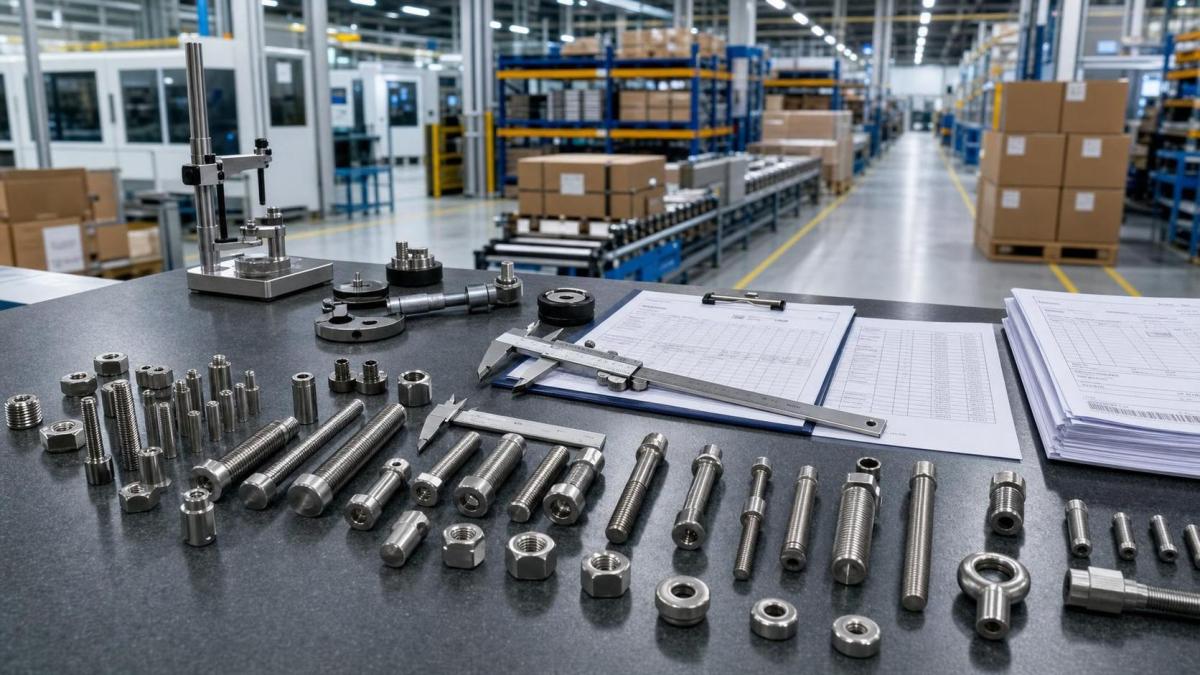
European projects often operate under tighter documentation expectations than many buyers first assume. CE-related obligations, REACH concerns, customer-specific PPAP requirements, and EN or ISO references can all shape what an acceptable delivery looks like.
A custom fastener supplier Europe buyers shortlist may serve very different sectors. One shop may be strong in rail assemblies. Another may specialize in stainless marine hardware. A third may support biometric access cabinets or smart lighting enclosures.
The consequence is clear. Capability cannot be assumed from location alone. The real question is whether the supplier can control metallurgy, process variation, paperwork, and shipment predictability for the exact application involved.
What “lead time and quality” actually includes
Lead time is not only quoted delivery days. It includes engineering response speed, tooling readiness, sample approval timing, raw material availability, plating queue, heat treatment scheduling, and export or intra-EU logistics discipline.
Quality is not only a final inspection report. It includes material identity, dimensional consistency, thread accuracy, mechanical performance, coating integrity, batch traceability, and how nonconformities are contained before shipping.
When evaluating a custom fastener supplier Europe source, these two factors are linked. Suppliers under planning stress often cut corners in first article review, gauge calibration, or subcontractor control. Schedule pressure frequently shows up as quality drift.
Start with application fit, not catalog breadth
The best supplier is usually the one that understands the load case and service environment, not the one with the longest product list. Custom fasteners for data center security racks differ sharply from those used in bridge components or battery tool housings.
Early screening should confirm several basics:
- Material families handled, such as carbon steel, alloy steel, stainless, brass, or titanium.
- Manufacturing routes, including cold forming, CNC machining, thread rolling, and secondary operations.
- Mechanical property range and heat treatment competence.
- Surface finishing options and corrosion testing capability.
- Experience with regulated assemblies and documented change control.
This stage filters out suppliers that can technically make the part drawing, yet cannot reliably support the intended duty cycle, approval path, or lifetime expectations.
Check the production chain behind the quotation
A quotation from a custom fastener supplier Europe office may hide a complex chain of subcontractors. That is not automatically a problem. It becomes a problem when ownership of quality data and schedule control is unclear.
Ask where each critical step happens. Material sourcing, forging, machining, heat treatment, plating, passivation, testing, and packaging should be mapped clearly. Lead time promises are only credible when those steps are visible.
Useful questions include whether capacity is reserved, whether bottleneck processes are internal, and how urgent orders are prioritized without disrupting existing production. Transparent answers usually signal operational maturity.
A practical comparison view
Traceability is the real confidence test
In safety-sensitive hardware, traceability separates a serious supplier from a merely responsive one. A custom fastener supplier Europe buyers trust should connect each batch to raw material records, process parameters, inspections, and shipment data.
This matters across SHSS-related environments. A fastener securing a brushless tool gearbox, a smart lock enclosure, a lighting bracket, or a protective barrier may look ordinary, yet failure investigation depends on intact batch history.
Documents worth reviewing include material certificates, dimensional reports, hardness or tensile data, coating records, nonconformance logs, and corrective action closure. Reliable traceability also supports recall containment if a defect is ever discovered.
How to judge quality systems without relying on certificates alone
ISO 9001 is useful, but it is only a starting signal. Some high-performing suppliers have disciplined controls beyond the certificate. Others display certificates while depending on manual habits that break under rush orders or engineering changes.
A stronger review looks at daily control behavior:
- How drawings are revised and released to production.
- How operators confirm thread, pitch, and tolerance limits.
- How first-off and last-off samples are retained.
- How deviations are approved before shipment.
- How customer complaints trigger root cause analysis.
When possible, review actual records rather than policy statements. Real examples reveal whether the system works under operating pressure.
Lead time claims need evidence from history
Many buyers ask for a standard lead time and stop there. A better approach is to ask for lead time by stage: design review, tooling, prototyping, approval samples, production, finishing, and dispatch. This exposes where delays usually occur.
A credible custom fastener supplier Europe partner should explain how it manages material shortages, holiday shutdowns, transport disruptions, and demand spikes. Europe offers strong industrial infrastructure, but regional congestion and subcontractor overload still happen.
Past on-time delivery data is especially valuable. Ask for recent performance by part family, not only an overall average. Complex specials and safety-critical items often behave differently from standard commercial fasteners.
Signals that the lead time is realistic
- Quoted times differ by process complexity.
- Tooling dependencies are named clearly.
- Safety stock or framework planning is discussed.
- Subcontracted operations have confirmed slots.
- Communication points are defined before shipment risk appears.
Use pilot orders to test the relationship under normal pressure
Before awarding a large program, a pilot order can reveal more than a long supplier presentation. It tests responsiveness, documentation quality, packaging discipline, lot labeling, and problem handling in a real transaction.
The pilot should not be artificially easy. Include a meaningful tolerance feature, a required test report, and a realistic delivery date. That creates a fair picture of how the custom fastener supplier Europe candidate performs in routine business conditions.
For higher-risk assemblies, it also helps to review installation behavior. A fastener that passes dimensional checks but causes torque scatter, galling, or coating damage in assembly is not fully qualified.
What to do next before final selection
A useful shortlist for any custom fastener supplier Europe search should combine technical fit, process transparency, and delivery discipline. Price still matters, but it should be interpreted against scrap risk, downtime risk, and documentation burden.
The next step is to build a simple scorecard around your own application. Weight traceability, mechanical testing, coating control, subcontractor visibility, and on-time delivery according to actual project exposure.
From there, compare two or three suppliers using the same evidence set, not sales language. That approach usually leads to a stronger long-term choice, especially where hardware reliability supports larger systems that must remain secure, stable, and accountable.
Recommended News