
Search News
Industry Portal
Hot Articles
Industrial Bolts and Nuts Price Guide: What Drives Cost in 2026
Time
Click Count
Industrial bolts and nuts price in 2026: what is really moving the number?
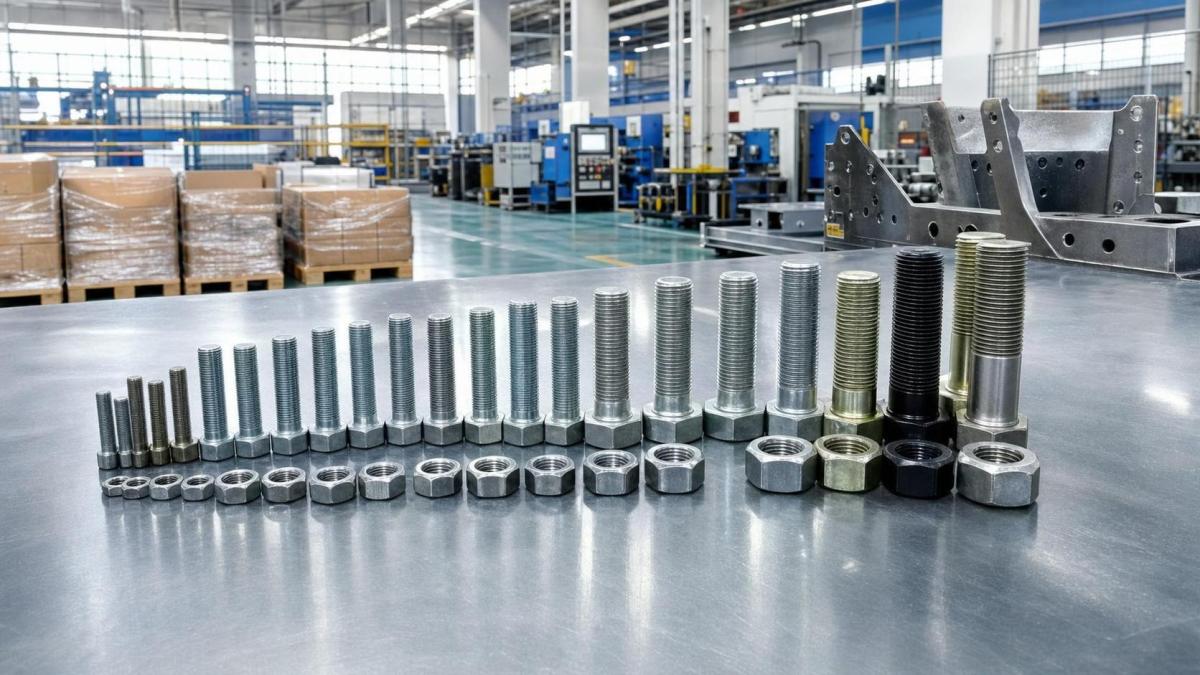
The industrial bolts and nuts price in 2026 is no longer a simple steel story.
Quoted cost now reflects material pressure, compliance demands, processing depth, logistics risk, and usage-critical performance.
That matters across construction, energy, transport, machinery, smart infrastructure, and security installations.
A low unit price can still become an expensive decision once corrosion, vibration, traceability, or delayed delivery enter the picture.
SHSS follows high-strength hardware as one of the physical anchors behind modern industry.
From bridge assemblies to biometric gate housings and smart lighting poles, fastening quality directly affects system stability.
So when teams compare industrial bolts and nuts price offers, the right question is not only “how much.”
The better question is “what exactly is included, protected, proven, and transferable into field reliability?”
Why do similar fasteners come back with very different quotes?
This is one of the most common points of confusion in industrial sourcing.
Two M16 hex bolts may look identical on paper, yet the industrial bolts and nuts price can differ sharply.
Usually, the gap comes from specification depth rather than supplier margin alone.
The first driver is raw material grade.
Carbon steel, alloy steel, stainless steel, and specialty materials sit in very different cost bands.
The second driver is mechanical class, such as 8.8, 10.9, 12.9, A2, or A4.
Higher strength often requires tighter chemistry control, heat treatment, and inspection.
Then comes finishing.
Plain finish, zinc plating, hot-dip galvanizing, Dacromet, PTFE, or specialty anti-corrosion systems all change the total cost.
Thread form, dimensional tolerance, head marking, lot traceability, and test certificates also matter.
In practical terms, buyers often receive a low quote with hidden exclusions.
Those exclusions may include no salt spray requirement, no impact testing, no third-party certification, or broader dimensional tolerances.
A quick comparison helps clarify the gap
When quote differences are mapped this way, the industrial bolts and nuts price becomes easier to judge.
Which cost drivers matter most in 2026, beyond steel?
Steel remains central, but it is no longer the only major force.
Energy cost is becoming more visible in fastener pricing.
Heat treatment, rolling, forging, coating, and furnace control all consume energy-intensive inputs.
Environmental compliance also has a pricing effect.
Restrictions on plating chemicals, wastewater handling, and emissions can raise factory overhead.
Shipping remains another variable.
Fasteners are heavy, low-volume-value items, so freight swings can quickly change delivered cost.
Lead time compression is also expensive.
Rush production, split shipments, and urgent testing almost always push the industrial bolts and nuts price upward.
One more factor is certification intensity.
Infrastructure, energy, rail, defense-adjacent, and data center projects often require deeper quality evidence than standard industrial applications.
That pattern is consistent with the broader SHSS view of modern hardware.
As smart cities scale, physical hardware must prove reliability with the same seriousness expected from digital security systems.
How should price be judged for different application environments?
Not every project needs the same fastener profile, and that is where many budgets drift.
A cheaper part may be perfectly acceptable indoors, dry, static, and lightly loaded.
The same part becomes risky outdoors, near salt, under vibration, or across maintenance-poor installations.
For example, smart lighting poles and access-control enclosures often face moisture, temperature swings, and long maintenance intervals.
In those cases, corrosion resistance and consistent torque retention deserve more weight than the lowest line-item cost.
Heavy equipment, brushless tool production, and structural frames bring a different concern.
Here, preload stability, fatigue life, and thread integrity can affect safety and warranty exposure.
A useful rule is to match price logic to failure consequence.
- Low consequence: standard finish and basic certification may be enough.
- Medium consequence: verify coating life, lot consistency, and fit tolerance.
- High consequence: prioritize validated strength, traceability, and failure-mode testing.
That approach gives the industrial bolts and nuts price a practical context rather than treating every SKU the same.
Where do buyers usually overpay or under-spec?
Overpaying usually happens when the specification copies a legacy drawing without checking the actual service condition.
A premium stainless grade may be carried over into a dry indoor application where plated alloy steel performs well enough.
Under-spec happens more often when coating and certification are treated as optional extras.
That may reduce the quoted industrial bolts and nuts price, but increase failure risk after installation.
Another frequent mistake is comparing only piece price instead of installed cost.
If thread quality is poor, assembly slows down, tool wear rises, and rejection cost appears on the production floor.
The following checklist usually catches the biggest pricing traps.
- Confirm whether the quote includes nuts, washers, coating thickness, and packaging style.
- Check if mechanical properties are guaranteed after coating and hydrogen relief.
- Review test documents, not just a statement of compliance.
- Ask whether dimensions are full standard or partially substituted.
- Verify batch lead time against realistic shipping windows.
These points are especially relevant when the quote looks unusually competitive.
What is a smarter way to compare industrial bolts and nuts price offers?
A clean comparison starts with a normalized inquiry sheet.
Without that, every supplier is pricing a slightly different product.
The best comparisons usually align six fields before quote review.
Once the quote base is normalized, it becomes easier to judge which industrial bolts and nuts price is genuinely competitive.
That is also the point where total cost should replace unit cost as the main decision metric.
What should be done next before locking 2026 supply?
The most effective next step is to separate critical SKUs from routine ones.
Not every fastener deserves the same sourcing effort, but critical assemblies do.
For those parts, build a decision sheet around service environment, grade, finish, compliance, and replacement consequence.
Then compare at least three offers on the same technical basis.
Where volatility is high, consider indexed material clauses or staged buying windows.
Where failure cost is high, request sample validation before full release.
The industrial bolts and nuts price in 2026 should be treated as a performance-linked number, not a commodity shortcut.
That is especially true in sectors where hardware supports smart access systems, connected lighting, industrial tools, or safety-critical structures.
A disciplined quote review, backed by application logic, usually prevents both overspending and hidden technical risk.
The clearest path forward is simple: define the real operating demand, normalize the inquiry, compare total delivered value, and verify before scaling.
Recommended News