
Search News
Industry Portal
Hot Articles
How to Select High Tensile Fasteners for Infrastructure Loads
Time
Click Count
Selecting high tensile fasteners for infrastructure loads goes far beyond choosing the highest grade on a datasheet. In bridges, rail systems, utility structures, ports, and smart city assets, fasteners transfer load, absorb vibration, and hold safety margins together over decades. A small mismatch in preload, coating, or material compatibility can raise fatigue risk, accelerate corrosion, and increase lifecycle maintenance. That is why high tensile fasteners for infrastructure should be assessed as part of a whole performance system, not as isolated hardware.
Why fastener selection now carries more strategic weight
Infrastructure is being asked to do more with longer service intervals and tighter compliance demands.
Loads are becoming less predictable as structures support heavier traffic, more retrofits, and denser urban equipment.
At the same time, projects increasingly combine steelwork, prefabrication, monitoring systems, LED installations, access control equipment, and protective enclosures.
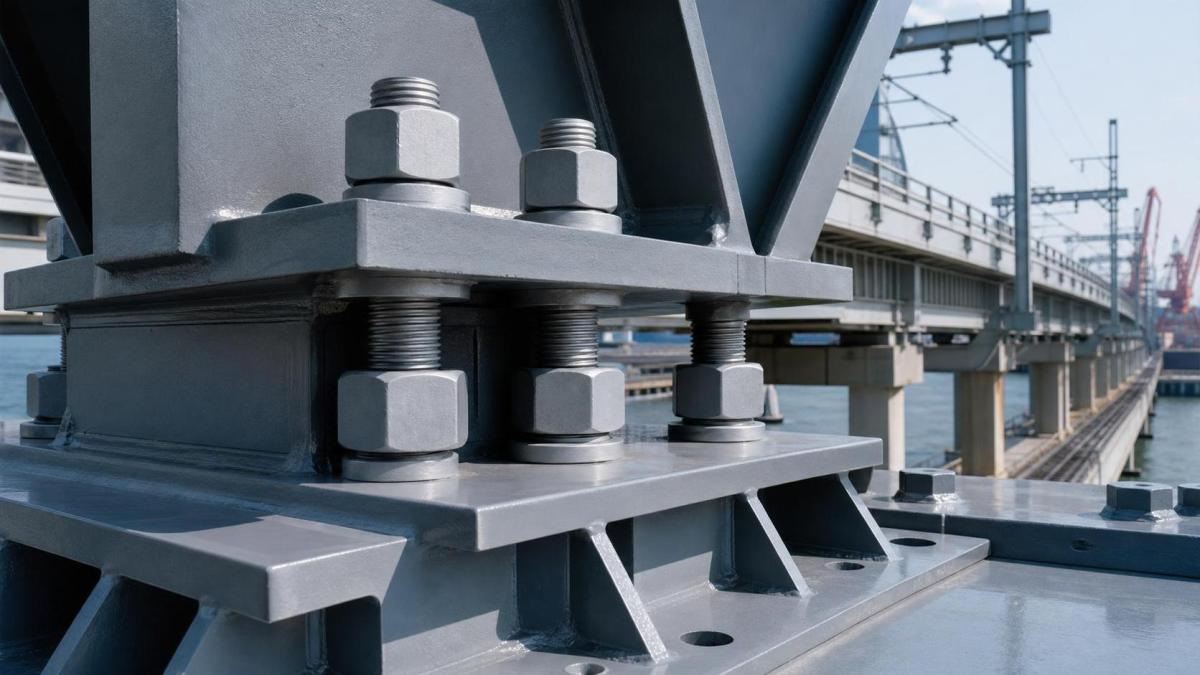
This broader context matters. SHSS tracks high-strength hardware alongside smart lighting, security systems, industrial tools, and PPE because infrastructure reliability is built from connected details.
A bolted joint in a bridge bearing, a mast bracket, or a security gate frame may look simple. In service, it faces tension, shear, thermal movement, moisture, dynamic shock, and installation variability.
That is where careful selection of high tensile fasteners for infrastructure becomes a risk-control decision, not a purchasing shortcut.
What “high tensile” really means in infrastructure use
High tensile describes fasteners designed to deliver elevated tensile strength and dependable clamping force under demanding loads.
In practice, selection usually involves more than nominal strength class.
The critical question is how a fastener behaves after installation, under repeated service cycles, and across its environmental exposure window.
Key performance factors behind the label
- Tensile strength and proof load for sustained clamping performance
- Yield behavior under installation torque and service stress
- Fatigue resistance where vibration or fluctuating loads dominate
- Shear capacity in joints carrying transverse forces
- Thread geometry and fit, which affect preload consistency
- Heat treatment quality, which influences toughness and brittleness risk
- Surface finish and coating compatibility with the base material
Simple strength comparisons miss these interactions. High tensile fasteners for infrastructure succeed when joint design, material condition, and installation method are aligned.
Start with the load path, not the catalog
A sound evaluation begins by mapping how force moves through the connection.
Some joints are primarily tension-controlled. Others are dominated by shear, slip resistance, bending, or combined loading.
Infrastructure connections often shift between these states during service.
For example, a gantry support may see static gravity load, wind reversal, vibration from transport flow, and thermal cycling in the same year.
In that case, selecting high tensile fasteners for infrastructure only by ultimate load rating is incomplete.
More useful questions include preload retention, joint slip tolerance, relaxation behavior, and inspection accessibility.
Typical load-related checks
Material and coating decisions shape service life
A strong fastener can still underperform if the material system does not suit the environment.
Outdoor infrastructure faces chlorides, humidity, pollution, deicing salts, standing water, and galvanic interaction between dissimilar metals.
This is especially relevant for coastal bridges, tunnels, roadside cabinets, lighting poles, and access-control frames integrated into smart city networks.
What to examine beyond base metal grade
- Corrosion class required by location and maintenance interval
- Risk of hydrogen embrittlement in high-strength plated fasteners
- Coating thickness versus thread engagement tolerance
- Compatibility with hot-dip galvanized steel members
- Temperature range and UV exposure for sealing accessories
Where maintenance access is difficult, corrosion resistance often justifies a more conservative specification.
For high tensile fasteners for infrastructure, lower replacement frequency can outweigh a higher unit price.
Standards, traceability, and installation control
Compliance is not a paperwork exercise. It is how selection decisions remain verifiable after handover.
Relevant standards vary by region and asset type, but the principle is consistent: specification, testing, and installation must point to the same performance target.
That means checking mechanical property certification, dimensional tolerance, coating process records, and batch traceability.
Installation control matters just as much. Even well-selected high tensile fasteners for infrastructure can fail when torque application is inconsistent or when lubrication assumptions change in the field.
Frequent weak points during execution
- Mixing fastener batches with different friction coefficients
- Using site tools that are not calibrated for target preload
- Replacing specified washers or nuts with near-equivalents
- Ignoring thread damage from transport or repeated trial fitting
- Applying coatings or touch-up treatments after installation without review
This is where the broader SHSS perspective becomes useful. Fastener performance is closely tied to tool capability, site safety discipline, and the operating environment of adjacent systems.
Where selection criteria change by infrastructure scenario
Not every asset should use the same decision matrix.
Bridge splices, solar support frames, street lighting structures, rail hardware, and security perimeters all place different demands on the joint.
This scenario-based approach usually produces better results than relying on one preferred fastener family across all projects.
A practical evaluation framework
When comparing high tensile fasteners for infrastructure, it helps to structure the review around a short set of decision filters.
Useful filters during specification review
- Define the real load case, including cyclic and accidental conditions
- Match strength class to joint design, not to habit
- Check corrosion strategy against the actual site exposure
- Verify relevant standards, testing records, and traceability
- Review installation method, lubrication state, and tool calibration
- Consider inspection access and replacement consequences
- Model lifecycle cost, not just purchase price
That last point is often decisive. A lower-cost option can become the expensive choice if retightening, shutdown access, or corrosion-related replacement enters the equation.
What to do next with an active project or specification
A useful next step is to review every critical connection as a combined load, environment, and installation problem.
From there, compare candidate high tensile fasteners for infrastructure against service life targets, compliance evidence, and field execution realities.
Where uncertainty remains, prioritize fatigue data, coating performance, and preload control before chasing headline strength numbers.
That approach creates a clearer basis for specification decisions and usually leads to more reliable infrastructure over the long term.
Recommended News