
Search News
Industry Portal
Hot Articles
Industrial Fastener Systems: How to Compare Load, Corrosion, and Lifecycle Cost
Time
Click Count
Industrial Fastener Systems: How to Compare Load, Corrosion, and Lifecycle Cost
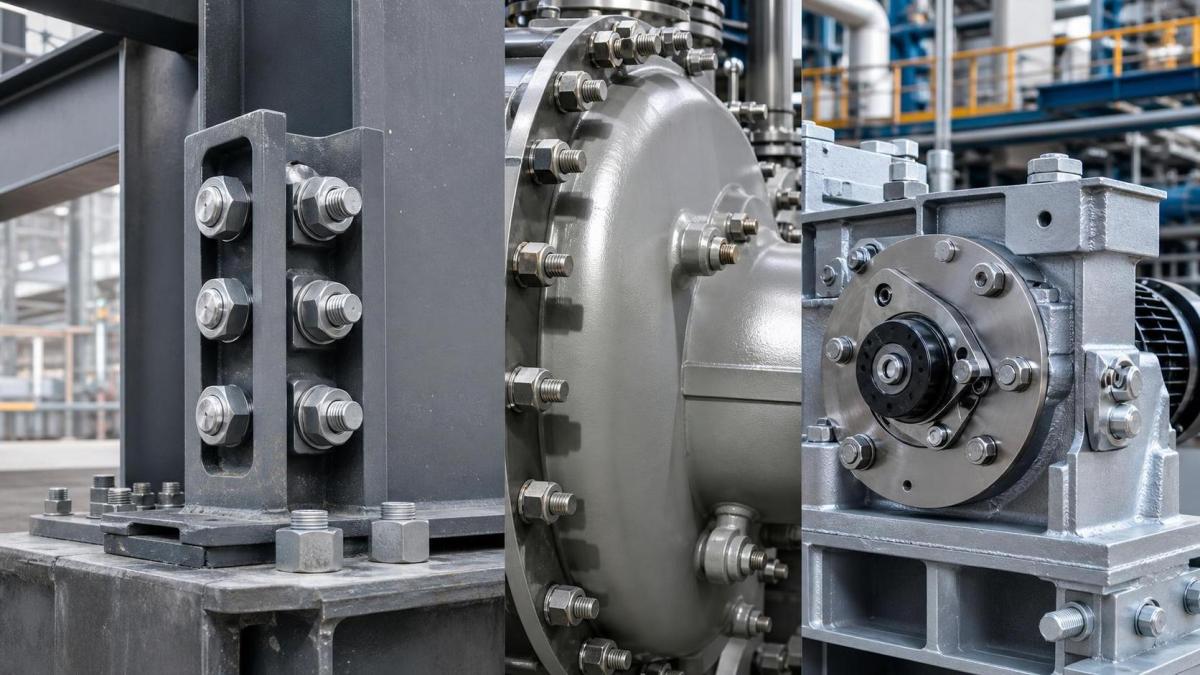
Selecting industrial fastener systems is never just about published tensile strength. On real projects, the difficult part is that load, corrosion exposure, installation method, inspection access, and maintenance intervals all interact. A fastener that looks conservative in a catalog can become the weak point in service if preload is lost, if galvanic corrosion starts at a dissimilar-metal interface, or if replacement requires shutdown time that was never priced into procurement. That is why experienced evaluators do not compare bolts, screws, studs, anchors, nuts, and washers as isolated parts. They compare the joint as a system.
In practice, “industrial fastener systems” usually refers to the full engineered combination: base material, fastener grade, thread form, coating or alloy choice, washer design, tightening method, and the service environment the assembly must survive. The same nominal diameter can perform very differently in a structural steel connection, a marine enclosure, a battery production line, or a food-processing frame. The selection logic changes because the failure mode changes.
One common mistake is to treat maximum load rating as the primary decision criterion. It matters, but it rarely tells the whole story. Many joints fail long before the fastener reaches theoretical material strength. They fail because of fatigue under vibration, embedding loss in clamped materials, improper preload, thread stripping in softer substrates, hydrogen embrittlement risk in some high-strength plated parts, or corrosion at cut edges and crevices. If the application is safety-critical or hard to access after installation, lifecycle behavior deserves as much attention as static strength.
Load comparison starts with the joint, not the bolt alone
Technical reviews often begin with tensile and proof strength, but that is only a starting point. What matters in service is how the joint carries load: pure tension, pure shear, combined loading, cyclic loading, impact, or vibration. A bracket in a stationary machine frame can tolerate a different fastening strategy than a rail component, rotating equipment housing, or façade fixing exposed to wind-induced movement. If the joint sees fluctuating load, preload retention often matters more than headline ultimate strength.
This is where evaluators should separate three questions:
- What load must the joint carry in normal service?
- What abnormal events must it survive, such as shock, overload, or thermal cycling?
- How sensitive is the assembly to preload loss or small movement over time?
Those questions quickly reveal whether the better option is a higher-strength carbon steel fastener, a stainless alternative with different mechanical limits, a structural bolting assembly, or a locking strategy that protects clamp force. In other words, load comparison is not only about stronger material. It is also about whether the joint design turns that material strength into stable service performance.
Standards matter here because they define minimum mechanical properties and test conditions, but standards are not interchangeable shorthand for field performance. ISO property classes, ASTM specifications, and structural fastener requirements are useful references only when matched to the actual application. A buyer who substitutes “equivalent strength” without checking coating process, dimensional tolerance, thread compatibility, and installation method can create a technically compliant but operationally poor assembly.
Corrosion resistance is really a service-life question
Corrosion evaluation is often oversimplified into a binary choice: carbon steel with coating versus stainless steel. Real selection is more nuanced. The first issue is exposure type. Indoor dry spaces, humid utility rooms, coastal atmospheres, chemical splash zones, washdown environments, and polluted urban exteriors do not attack fasteners in the same way. The second issue is joint geometry. Water traps, crevices, damaged coatings, and bimetal contact can accelerate degradation well beyond what a generic corrosion test suggests.
Salt spray data, when available from manufacturers, can help compare finishes, but it should not be treated as a direct prediction of field life. It is one comparative indicator, not a service guarantee. Evaluators should also ask what kind of corrosion is unacceptable in the application. Cosmetic rust on a non-critical enclosure is one thing. Thread seizure, section loss, clamp-force reduction, or contamination risk in hygienic processing equipment is another.
Stainless steel is often specified as the default solution for corrosion resistance, yet that choice also has limits. In chloride-rich environments, some stainless grades may still face pitting or crevice corrosion. In high-load applications, the lower strength of common stainless fasteners relative to some alloy or heat-treated carbon steel options can require a larger diameter, more fasteners, or a different joint layout. Material choice should therefore be framed around environment plus load, not environment alone.
Another area that deserves attention is dissimilar-metal contact. Aluminum structures, galvanized steel supports, stainless hardware, and coated washers can form an electrochemical system that behaves differently from each material considered alone. If the assembly is part of outdoor infrastructure, smart lighting poles, access-control housings, or industrial equipment installed across varied climates, galvanic compatibility should be reviewed early. This is a classic source of avoidable maintenance cost because the initial fastener price difference looks small, but remediation in service is not.
Why lifecycle cost often changes the ranking
Fastener procurement still gets compressed into unit price too often. That works only for non-critical, easy-to-replace applications with stable environments. For anything exposed, safety-relevant, vibration-prone, or difficult to access, lifecycle cost is usually the better decision lens. It includes purchase price, installation labor, torque-control requirements, inspection frequency, downtime risk, replacement intervals, and the cost of adjacent damage if the joint deteriorates.
This is where cheap and economical stop meaning the same thing. A low-cost plated fastener may look attractive in bid comparison, but if it requires earlier replacement, generates corrosion staining on visible assets, or needs anti-seize handling and more labor during maintenance, it may lose on total ownership cost. By contrast, a more expensive alloy or coating system can be financially rational when replacement access involves lift equipment, line stoppage, confined-space work, or compliance documentation.
For technical evaluators, that table is where cross-functional procurement becomes more disciplined. Engineering defines what failure means. Operations defines what access and downtime cost. Quality defines traceability needs. Purchasing then compares suppliers on a basis that reflects actual business risk rather than a narrow component price.
A practical comparison framework
A useful way to compare industrial fastener systems is to score them against the conditions that most often break assumptions in the field.
- Define the load case clearly. Static catalog values are not enough if the joint will see vibration, repeated thermal expansion, or shock.
- Check the substrate and clamped materials. Concrete, sheet metal, castings, composites, and structural steel each change the governing failure mode.
- Review environmental exposure honestly. “Outdoor use” is too vague for selection; coastal, industrial, washdown, and intermittent-condensation environments behave differently.
- Verify installation assumptions. Torque values, lubrication condition, and tool control affect achieved preload more than many buyers realize.
- Price maintenance, not just hardware. The right question is not only “What does this fastener cost?” but also “What does failure or replacement cost here?”
That framework is especially relevant in sectors where hardware sits quietly in the background but carries real operational consequence: industrial power tools, security enclosures, access systems, lighting infrastructure, protective equipment assemblies, plant equipment, and civil installations. In all of these, the fastener is small compared with the asset, but it often controls whether the asset remains stable, sealed, aligned, and serviceable.
Misunderstandings that distort selection
Several assumptions show up repeatedly in technical reviews. One is that higher strength is always safer. It is not, especially if the environment, coating process, or installation method introduces brittleness or preload inconsistency. Another is that stainless automatically solves corrosion. It may reduce some risks while creating others, including strength trade-offs and galling concerns in certain assemblies. A third is that the fastener alone determines reliability. In reality, washer selection, hole quality, torque procedure, joint stiffness, and mating material condition can matter just as much.
There is also a procurement bias toward visible specification fields because they are easy to compare on spreadsheets. Diameter, grade, finish, and unit cost are simple columns. Joint behavior over ten years is not. That is why experienced teams ask better questions upstream: Is this a replaceable maintenance item or a fit-and-forget connection? What happens if corrosion locks the threads? Is traceability required for regulated or safety-related assemblies? Does the supplier provide consistent documentation on material, coating, and performance claims?
What a sound decision usually looks like
A sound selection decision rarely produces the universally strongest or cheapest fastener. It produces a fastening system matched to the application’s real failure risks. For some assemblies, that means prioritizing preload stability and fatigue resistance. For others, it means accepting a higher upfront part cost to reduce corrosion-driven maintenance. In exposed infrastructure or smart-city equipment, the correct choice often comes from balancing material compatibility, environmental durability, and service access rather than chasing a single impressive mechanical number.
When comparing industrial fastener systems, the most useful discipline is to force the discussion out of the catalog and into the operating context. Ask what the joint must survive, what loss of integrity would cost, and what assumptions the specification is making about installation and environment. Once those answers are on the table, load, corrosion, and lifecycle cost stop competing as separate criteria. They become three views of the same decision.
Recommended News